The Death of Discovery: Preparing for Agentic Commerce and GEO in Book Marketing

A strategic white paper on the shift from human browsing to AI-driven purchasing agents. Analysis of Generative Engine Optimization (GEO) and the infrastructure
The Mechanics of Agentic Commerce
Agentic Commerce represents a fundamental inversion of the retail model. Historically, marketing was designed to interrupt human attention and compel a click. In the agentic model, defined clearly by Logicbroker's technical analysis, the consumer delegates the research and transaction to an AI agent. The user command shifts from "Show me sci-fi books" to "Buy the best-rated space opera released this month compatible with my Kindle."
This shift renders traditional "cover appeal" and emotional copy secondary to machine readability. If an AI agent cannot parse your book's pricing, format compatibility, and genre fit via API or structured data, the book is invisible. We are moving from a visual shelf to a logical database.
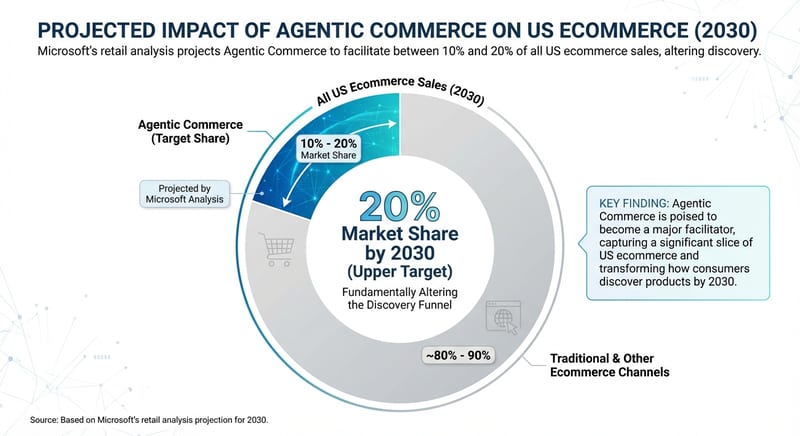
While 20% may seem like a minority share, it represents the "premium" segment of efficiency-focused buyers. More importantly, the infrastructure being built to serve these agents (APIs, clean data feeds) will become the standard for all discoverability. Authors who ignore this will find themselves optimizing for a legacy system (the human browser) that is rapidly shrinking in volume.
Nuance: The Disintermediation of the Storefront
The technical reality of this shift is the erosion of the "storefront" concept. In an agentic transaction, the AI agent does not visit a website's homepage; it queries the backend database directly. This means that elements like banner ads, pop-ups, and sidebar recommendations—staples of 2025 book marketing—become irrelevant to the transactional agent.
For authors, this necessitates a pivot toward "Headless Commerce" principles. Your book's data must be portable and accessible via the Model Context Protocol (MCP), ensuring that whether the agent is from OpenAI, Google, or Amazon, it can retrieve the necessary purchase data without hitting a visual interface wall.
Generative Engine Optimization (GEO)
As the mechanism of search evolves, so must the optimization strategy. We are witnessing the death of SEO (Search Engine Optimization) and the birth of GEO (Generative Engine Optimization). As noted in Deloitte’s Consumer Products Outlook, companies are now racing to master this new discipline. SEO was about ranking a link on a page; GEO is about ensuring your content is the *source of truth* synthesized by the AI.
When a user asks ChatGPT, "What is the definitive book on Roman history?", the AI does not provide a list of ten blue links. It provides a single answer or a short list. To be included in that synthesis, an author's digital footprint must be authoritative, cited by high-trust domains, and structured in a way that Large Language Models (LLMs) prioritize during training and retrieval.
Nuance: The Structure of Authority
GEO relies heavily on "Knowledge Graph" connections. An isolated book website is less valuable to an LLM than a book that is linked to from Wikipedia, reviewed by major media outlets, and cataloged in semantic databases like Wikidata. The AI seeks consensus and connection.
This implies that PR and "digital tenure" are more critical than keyword density. A mention in a high-authority publication signals to the AI that this entity (the book) is a valid node in the knowledge graph, increasing the likelihood of it being recommended in a conversational query.
"We are moving from a world of 'ten blue links' to a world of one singular answer. If you aren't the answer, you are invisible. - Joanna Penn, The Creative Penn"
- Schema Markup: Implement rigorous JSON-LD schema on author websites to explicitly tell crawlers 'This is a Book,' 'This is the ISBN,' and 'This is the Author.'
- Entity Density: Ensure marketing copy references related authoritative entities (e.g., specific sub-genres, comparable famous authors) to help the AI categorize the work correctly.
- Citation Velocity: Focus on getting cited in 'seed set' websites that AI models use for ground-truth training.
The Retail Adoption Curve
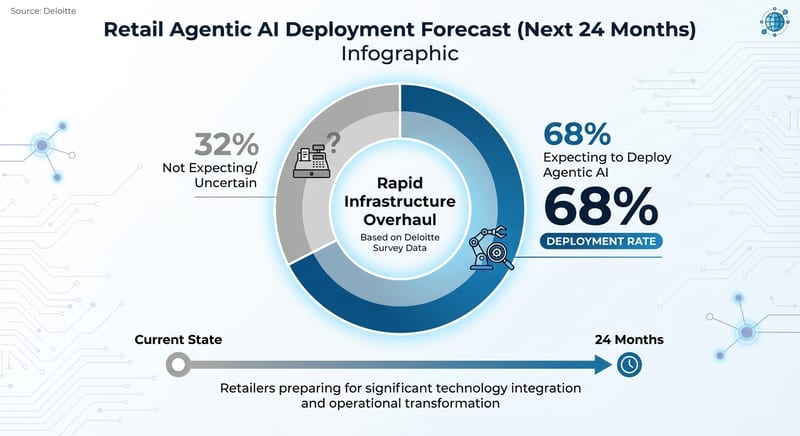
Authors often view these technological shifts as distant science fiction, but the retail infrastructure is already being deployed. Major retailers are not waiting for 2030; they are integrating these systems now to reduce friction and increase basket size. Deloitte’s 2026 Retail Outlook highlights that the experimentation phase is over, and execution is underway.
For the publishing industry, this means Amazon and other major booksellers will likely introduce "concierge" bots. An author's ability to sell will depend on whether their metadata is rich enough to satisfy the queries of these internal retail agents. A book with missing tags, poor categorization, or ambiguous pricing will be filtered out by the concierge long before a human shopper could have seen it.
Nuance: The Model Context Protocol (MCP)
The defining technical standard of this era appears to be the Model Context Protocol (MCP). This standard allows different AI models to understand the context of data inputs. For an author, this means your book's data feed (title, blurb, price, reviews) acts as a standardized API that any agent can read.
If an author's direct sales store (e.g., Shopify) is not MCP-compliant or API-accessible, it creates a "walled garden" that AI agents cannot penetrate. In a world where convenience is king, an agent will not work extra hard to scrape a non-compliant site; it will simply purchase the competitor's book that offered a clean data handshake.
The Human Moat: Surviving Automation
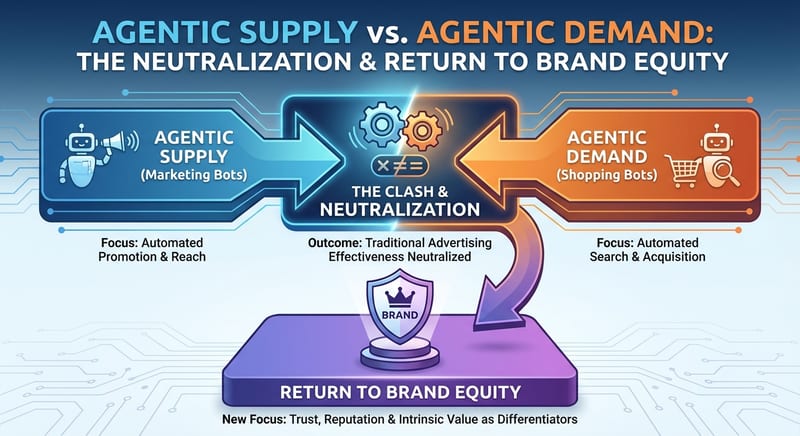
As algorithmic efficiency creates a "winner take all" dynamic for digital commodities, the only durable defense is the "Human Moat." Joanna Penn’s analysis of the '1,000 True Fans' model becomes even more pertinent. When AI controls the search, it tends to favor the lowest price or the highest aggregate rating. It cannot measure 'loyalty' unless that loyalty is encoded in a direct request.
Therefore, the goal of marketing shifts from "discovery" (finding new people) to "retention" (training existing people to explicitly request your work). A reader who tells their AI "Buy the new book by [Author Name]" bypasses the entire GEO/SEO war. This brand loyalty is the only metric that Agentic Commerce cannot commoditize.
Nuance: The Tangible Value Proposition
To build this loyalty, authors must offer what AI cannot generate: tangible, physical, and experiential value. Special edition hardcovers, signed bookplates, and live events become the premium tier of the author business. The digital file (ebook/audio) becomes the utility commodity, potentially managed by agents, while the physical artifact becomes the relationship builder.
Microsoft's report on "Return on Intelligence" suggests that the human edge in an agentic era is empathy and connection. Authors should double down on personal storytelling in newsletters—content that an AI might summarize but cannot replicate the feeling of connection to.
- Direct-to-Consumer (DTC) Exclusives: Products available ONLY on your site, forcing the AI to come to you.
- Community Access: selling membership, not just content.
- High-Fidelity Audio: Narrated by the author, creating a biometric connection AI cannot forge.