The Book as Product: Engineering a Go-To-Market Strategy for Authors

Stop 'launching' and start 'positioning.' We dismantle the traditional book launch in favor of enterprise-grade Go-To-Market (GTM) strategies and sales playbook
The Go-To-Market (GTM) Architecture
In the technology sector, no product launches without a Go-To-Market strategy. In publishing, however, authors frequently finish a manuscript and then ask, 'Who is this for?' This is a catastrophic inversion of the sales process. A GTM strategy is not a marketing plan; it is a comprehensive blueprint that defines the target audience, the value proposition, and the distribution channels before the product hits the shelves. It requires the author to pivot from an 'artist' mindset to a 'product owner' mindset.
The context for this shift is the saturation of the digital shelf. With millions of titles available, organic discoverability is effectively zero. A book without a defined audience profile is a signal lost in the noise. The most successful authors today are those who identify a specific reader 'pain point'—whether that is the need for escapism in a specific sub-genre or a solution to a technical problem—and engineer the book to solve it.
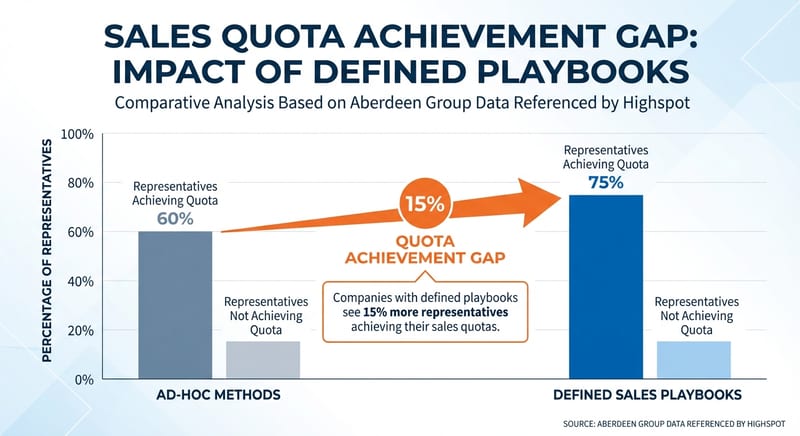
This statistic reveals the operational gap between hobbyists and professionals. The act of documentation forces clarity. When you write down your GTM strategy, you are forced to confront weak value propositions and vague audience definitions before you waste capital on ads. It transforms 'I hope people like this' into 'I have engineered this for the Demographic X who buys Y.'
The Nuance: Product-Market Fit Verification
The technical edge case here is 'Product-Market Fit' (PMF). In a startup, you pivot the product until the market bites. In writing, you cannot rewrite the book every week. Therefore, PMF must be established in the pre-production phase. This involves analyzing 'comp titles' (comparable books) not just for inspiration, but for market viability analysis. Are the bestsellers in your niche published within the last 12 months? If not, the market may be dormant.
True verification comes from 'Smoke Testing'—running low-budget ads to a landing page for the book before it is written, or testing cover concepts in reader groups. If you cannot get a click-through on the concept, the execution will not save you.
- Persona Mapping: Create a detailed avatar of your 'Ideal Customer Profile' (ICP). Age, location, other authors they read, and where they hang out online.
- Competitor Analysis: Read the 1-star and 2-star reviews of your competitors to find the 'gap' in the market.
- differentiation: Define exactly why your book is the superior alternative.
The Description as a Conversion Mechanism
The greatest misconception in book marketing is that the 'blurb' is a summary. It is not. It is high-stakes direct-response sales copy. As noted by Kindlepreneur, the book description must be treated as a sales pitch designed with a single objective: to get the reader to click 'Buy' or 'Download Sample.' Summaries kill mystery; sales copy creates it.
In the economy of attention, you have roughly 300 words to convince a stranger to commit 10 hours of their life to you. This requires a shift in rhetorical structure. You must move from 'This happens, then this happens' to 'This is the problem, and reading this book is the only way to resolve the tension.'
The Nuance: The 'Above the Fold' Hook
On Amazon and most retailers, only the first few lines of your description are visible before the 'Read More' cutoff. This real estate is the most valuable text you will write. If the first sentence does not hook the reader, the rest of the description does not exist. The technical requirement is to place the primary conflict or value proposition in the first 150 characters.
For non-fiction, this means stating the result immediately (e.g., 'Double your reading speed in 30 days'). For fiction, it means establishing the stakes (e.g., 'She had one hour to live, and the clock just stopped').
"“Don't summarize the plot. Focus on the 'why'"
- The Hook: A single sentence that presents a unique premise or conflict.
- The Body: Elaborate on the stakes. What does the protagonist stand to lose? Or what problem will the reader solve?
- The Climax/CTA: Leave the reader on a cliffhanger or promise a specific transformation.
The Sales Playbook: Systematizing Success
Enterprise sales teams do not improvise; they execute from a Sales Playbook. This is a living document that houses repeatable scripts, objection handling techniques, and outreach templates. Authors often suffer from 'random acts of marketing'—trying TikTok one week, ads the next, and giving up on both. A playbook stabilizes your effort by defining standard operating procedures (SOPs) for every phase of the book's lifecycle.
Contextually, this matters because consistency outperforms intensity. A mediocre marketing plan executed daily beats a brilliant plan executed once. By creating assets like 'The Podcast Interview Pitch' or 'The Review Request Template' in advance, you reduce the friction of execution.
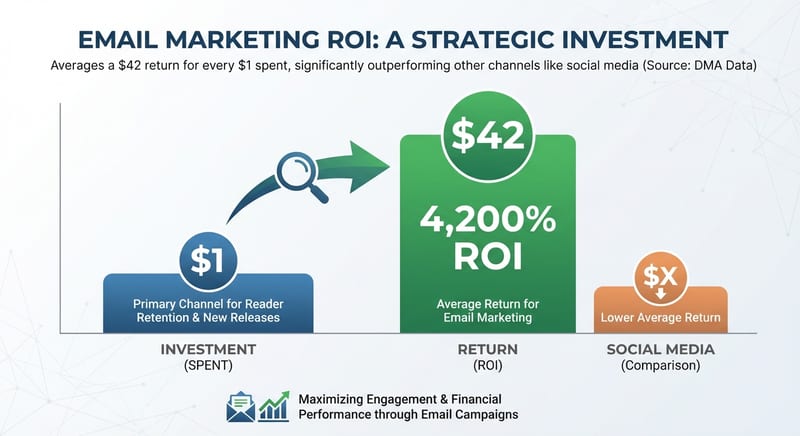
For an author, your 'quota' is your daily sales rank or monthly revenue target. The playbook ensures that when sales dip, you have a pre-defined set of levers to pull—a price drop promo, a newsletter swap, or a fresh ad creative—rather than panicking.
The Nuance: Objection Handling
In sales, an objection is a reason a customer declines to buy. In books, objections appear as reviews: 'Too slow,' 'Too technical,' 'Didn't like the ending.' A robust playbook anticipates these. If you know your book is a 'slow burn,' your marketing copy must explicitly frame that as a feature ('A meticulous, atmospheric deep dive'), effectively handling the objection before the purchase is made.
This pre-framing filters out the wrong readers—those who would leave negative reviews—and attracts the right ones, protecting your product's long-term rating.
Building Rapport: The Art of Selling Yourself
People buy from people they like. In the literary world, the author's brand is often more potent than the book itself. Effective selling is fundamentally about establishing rapport. For an author, this means cultivating a voice that resonates with the target demographic, not just in the book, but in every tweet, email, and blog post.
The modern reader craves connection. They want to know the human behind the keyboard. This is where 'Professional Vulnerability' comes into play—sharing the struggles of the process without losing authority. It transforms a transaction ($9.99 for a book) into a relationship (supporting a favorite creator).
The Nuance: Voice as a Differentiator
Your 'Voice' is your USP (Unique Selling Proposition). In a market flooded with AI-generated content, an authentic, idiosyncratic human voice is a premium asset. Whether it is snarky, academic, compassionate, or brash, consistency in that voice builds trust. If your social media persona matches the tone of your book, you create a seamless user experience.
This extends to 'consultative selling' for non-fiction authors. You are not just selling a book; you are selling a methodology. Demonstrating expertise through free content (articles, podcasts) proves the value of the paid product (the book) in advance.
"“Active listening and empathy are the foundations of sales. In writing, this translates to understanding your reader's desires better than they do.”"
Product Quality as Retention Strategy
Marketing sells the first book; quality sells the rest. Jerry Jenkins emphasizes that studying the craft—via masterworks like Stephen King’s On Writing or Robert McKee’s Story—is not an academic exercise, but a commercial necessity. A disappointed reader is a churned customer who will never return, regardless of your ad spend.
In SaaS terms, we look at LTV (Lifetime Value). If a reader finishes Book 1 and immediately buys Book 2, your CAC (Customer Acquisition Cost) pays off exponentially. If they stop at Book 1, your business model collapses. Therefore, 'craft' is actually 'retention engineering.'
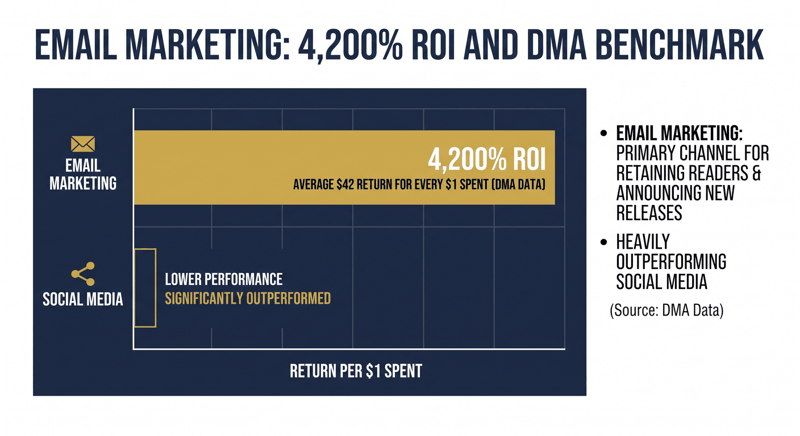
This incredible ROI is only possible if the product quality justifies the subscription. You cannot monetize an email list of people who didn't like your book. The synthesis of high-quality writing and direct access (email) creates the engine of the author career.