The CEO Author: Book Marketing Strategies for the Post-Algorithm Era

Stop treating your book like a lottery ticket. This white paper analyzes the shift to direct sales, the necessity of book proposals, and the 2026 marketing land
Product Validation: The Book Proposal as Business Plan
Most authors commit the cardinal sin of manufacturing: they build a product before verifying a market exists. In the traditional corporate world, this would be grounds for termination. In publishing, it is inexplicably the norm. The corrective mechanism for this failure is the book proposal. While traditionally associated with nonfiction, Jane Friedman argues that the discipline of drafting a proposal is essential for all authors to establish a business case for their work.
A proposal forces the author to confront uncomfortable realities: Who is the specific readership? What is the competitive landscape? Why does this book matter *now*? It shifts the focus from "writing quality"—which is subjective and abundant—to "marketability," which is objective and scarce. If you cannot articulate the business case to yourself, you certainly cannot sell it to a reader.
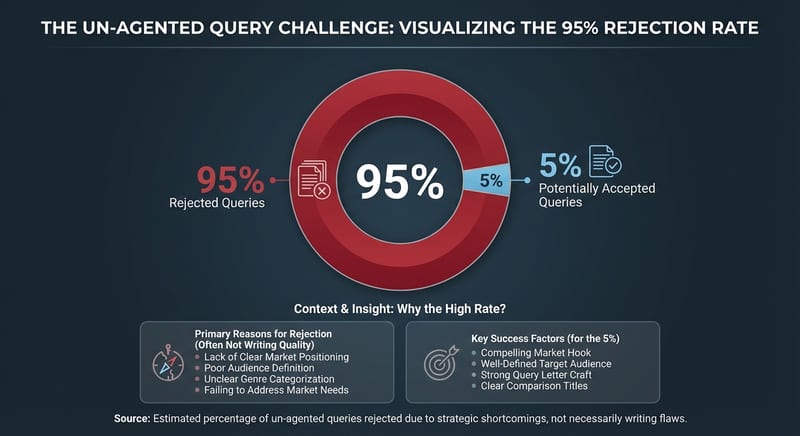
This statistic is not meant to discourage; it is a metric of efficiency. The 95% fail because they treat the query as a request for permission rather than a pitch for partnership. The successful 5% demonstrate that they understand their specific vertical in the marketplace.
Nuance: The Memoir Dilemma
Nowhere is the tension between art and commerce more palpable than in memoir. Authors frequently mistake catharsis for commerce. Just because a story was difficult to live through does not mean it is profitable to sell. The nuance here is "Platform vs. Prose."
For a memoir to succeed as a product, the author must usually possess a pre-existing platform or a unique, universal hook that transcends the personal. Without this, the manuscript is merely a diary. The market demands that personal narrative serves a broader purpose for the reader, not just the writer.
Structural Engineering: Craft as a Retention Metric
In marketing terms, "craft" is simply product quality assurance (QA). A book that fails to follow structural expectations is a defective product that leads to negative reviews and high return rates. Nathan Bransford emphasizes that avoiding trend-chasing is crucial, yet adhering to the fundamental "Quest" structure (Start, Journey, End) is non-negotiable.
Readers of specific genres have codified expectations. A thriller must thrill; a romance must have a happily-ever-after. Deviating from these under the guise of "artistic freedom" is often just a failure of product design. The goal is to innovate *within* the framework, not to dismantle the framework itself.
Nuance: The POV Violation
A specific technical failure that kills reader retention is "head-jumping"—shifting perspectives mid-scene. This breaks the immersion state, which is the primary value proposition of fiction. Maintaining a consistent narrative distance is not just an arbitrary rule; it is essential for customer satisfaction.
By rigorously planning the climax early and ensuring the setting has its own "personality," authors create a seamless user experience. This reduces friction, keeping the reader in the "fictive dream" until the final page.
"Story always trumps structure, but don't let formulas derail the narrative. Dream big, execute small. - Jerry Jenkins"
The Sovereign Infrastructure: Direct Sales & 2026 Trends
The era of exclusive reliance on retailers (Amazon, Apple, Barnes & Noble) is ending. These platforms are "walled gardens" that hide customer data from the creator. The 2026 forecast from The Creative Penn identifies the rise of the "Sovereign Author"—creators who own their transactional infrastructure via Shopify, WooCommerce, or Kickstarter.
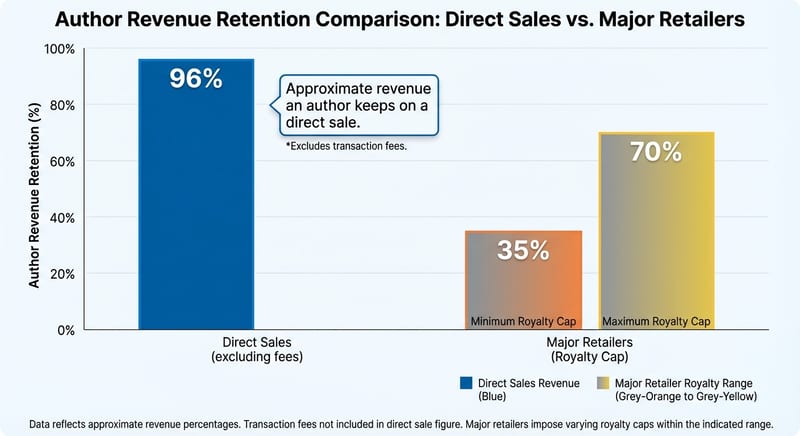
Direct sales are not just about higher margins; they are about data ownership. When you sell directly, you acquire the email, the location, and the purchase history of the reader. This data allows for the creation of "Lookalike Audiences" and high-LTV (Lifetime Value) marketing campaigns that are impossible on third-party platforms.
Furthermore, this model insulates the author from algorithm changes. If Amazon changes its visibility algorithm tomorrow, the Sovereign Author still has a direct line to their customer base. It is the only true insurance policy in a volatile digital economy.
Nuance: The "Artisan" Pivot
With the influx of AI-generated content, mass-market generic books are racing to a price of zero. The counter-move is the "AI-Assisted Artisan Author." This strategy involves using technology to handle administrative bloat while doubling down on the "human" elements of the brand: premium print editions, signed copies, and deep community engagement.
Readers in 2026 are not just buying information; they are buying connection. They will pay a premium for a "beautiful object" sold directly by the creator, whereas they might only pay $0.99 for the digital file on Amazon.
- Kickstarter: Use for limited edition print runs to fund production costs upfront.
- Shopify: Use for day-to-day backlist sales and bundle offers (e.g., Ebook + Audiobook).
- Patreon/Substack: Use for recurring revenue from "True Fans."
The Launch Protocol: 6 Months to Lift-Off
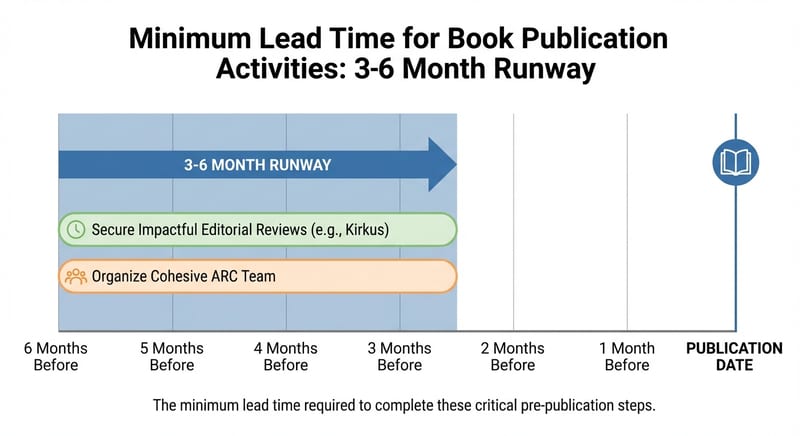
A book launch is not an event; it is a campaign. Amateurs launch on publication day; professionals launch six months prior. A detailed analysis of a debut novel strategy reveals that the "Pre-Launch" phase is where the battle is won or lost. This involves stripping away sentimentality and treating the book as a unit of inventory.
The core of this strategy is ARC (Advance Review Copy) distribution. Securing reviews before the book is purchasable provides the "Social Proof" necessary to convert cold traffic. Without 20-50 reviews on Day 1, advertising dollars are essentially incinerated.
Nuance: Paid vs. Organic Visibility
In the crowded fiction market, organic reach is near zero for new authors. The strategy must pivot to paid visibility. This does not always mean Facebook Ads. It often means utilizing promo sites like BookBub or paid editorial reviews like Kirkus Indie to establish initial credibility.
While these services require upfront capital, they provide the "badge of authority" that signals quality to potential readers. It is an investment in the asset's long-term convertibility, not a vanity expense.
Ultimately, the authors who succeed in 2026 will be those who balance the "Shadow"—the deep, personal creative wounds that drive art—with the cold, hard logistics of the "Sovereign" business model. It is a duality of intense vulnerability in creation and ruthless efficiency in execution.