BookSprout Alternatives: 7 ARC Platforms That Work (2026)

A direct, data-backed comparison of BookSprout against 7 better ARC review platforms for self-published authors in 2026, including pricing, review completion ra
Why authors look past BookSprout in 2026
BookSprout has run an automated ARC distribution model since 2018. The pitch is simple: upload a manuscript, set a deadline, and the platform delivers your book to readers who agree to leave a review on Amazon. For some authors, that pipeline works. For many others, three structural problems push them to look elsewhere.
The first issue is file format. BookSprout enforces strict size and format limits that block longer manuscripts, full-color non-fiction, and graphic-heavy books. The second is reviewer signal. Author complaints on Trustpilot describe reviewers with multiple overdue commitments and review counts that suggest they cannot have actually read each title at the pace claimed. The third, and most painful, is Amazon review removal. Because BookSprout asks reviewers to post a short disclosure line, Amazon algorithms often flag those reviews as part of an organized campaign and strip them within days.
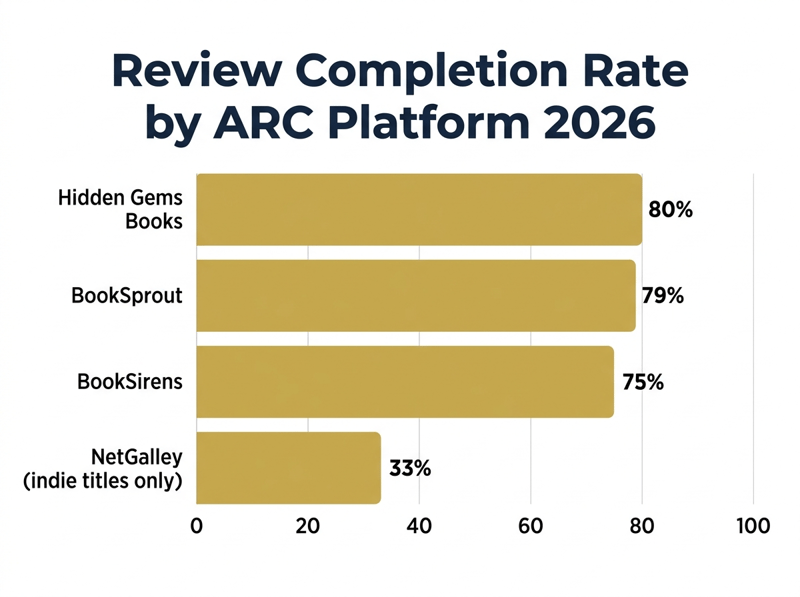
None of this means BookSprout is broken. It means the platform serves a narrow lane: short to medium-length romance and thriller ARCs distributed in volume to a low-cost reader pool. If your book sits outside that lane, or if you simply want reviews that survive Amazon filters, the alternatives below cover every gap. Recent Trustpilot reviews make the trade-offs clear.
What to actually evaluate in an ARC platform
- Reader pool size and genre fit||Review completion rate (downloads vs posted reviews)||Amazon terms of service compliance and review survival||File format and book length support||Multi-platform review collection (Amazon, Goodreads, BookBub, Apple Books, Kobo)||Reviewer vetting and serial refund protection||Total cost per surviving review, not per download||Watermarking and piracy protection on every download
Most authors anchor on the cheapest entry price, which is the wrong lens. A platform that charges 50 dollars and produces 20 surviving Amazon reviews is dramatically cheaper per usable review than a 20 dollar platform that produces 50 reviews where Amazon strips 80 percent within a week. Always calculate cost per surviving review, not cost per download.
The 7 best BookSprout alternatives for 2026
Each platform below solves a different problem. Read each profile against your launch goals before you commit. The right answer is rarely just one tool: most authors who hit 100+ Amazon reviews in 90 days run 2 or 3 platforms in parallel and route different reader segments through each.
1. Read & Rate
Read and Rate is the all-in-one author success platform built specifically for indie authors who want reviews that survive Amazon filters. Reviewers are vetted before they can request ARCs, every download is automatically watermarked with the reviewer identity to deter piracy, and authors collect reviews on multiple platforms (Amazon, Goodreads, BookBub, Apple Books, Kobo) instead of being locked into Amazon-only campaigns.
The platform also includes a private indie author community for tip exchange, book biometrics for tracking review velocity and sentiment, native file conversion (EPUB, MOBI, PDF), and UGC video creation for social campaigns. Pricing starts from 25 dollars per month with no per-review upcharges. You can start a free trial at readnrate.com.
2. BookSirens
BookSirens runs a vetted reviewer model. Readers must have at least 20 starred ratings on Goodreads before they can join, and each reader can only download one ARC at a time. They cannot start a new one until the active title is reviewed. The result is a 75 percent average review completion rate and a noticeably lower share of low-effort or fake reviews compared to wide-open platforms.
BookSirens charges per download, which is friendly for low-budget launches but can scale fast on bigger releases. It is strongest for genre fiction in romance, thriller, fantasy, and sci-fi. Listing details and current per-download pricing are at booksirens.com.
3. Hidden Gems Books
Hidden Gems Books has run a curated ARC program for indie genre fiction since 2017. Authors pick a genre, the number of reader spots (25 to 100+), and a launch window. Hidden Gems vets every applicant to filter out serial refunders and spoiler accounts, and reviewers can now post to Amazon, Goodreads, Kobo, Apple Books, Google Play Books, Barnes and Noble, and BookBub.
Pricing starts around 50 dollars for 25 readers and scales to roughly 110 dollars for 100 readers, with a 50-reader minimum on most campaigns. The waiting list is real: established romance authors often book launch slots months in advance. Full program details at hiddengemsbooks.com.
4. StoryOrigin
StoryOrigin combines ARC distribution, newsletter swaps, reader magnet landing pages, and promo tracking inside one tool. ARC management is DRM-free with download limits, expiration dates, and built-in feedback collection. The newsletter swap directory is the real differentiator: authors trade list promotions with peers in the same genre, which compounds review pickup over time.
StoryOrigin offers a free tier and premium plans from 11 to 17 dollars per month. It integrates with MailerLite, ConvertKit, and BookFunnel so reader magnets and ARC handling stay synced. Sign up at storyoriginapp.com.
5. BookFunnel
BookFunnel is the industry standard for ARC and reader magnet delivery. It supports every major eBook format, offers custom landing pages per ARC campaign, password protection, download limits, expiration dates, and automated reader email notifications. If your reader complains they cannot sideload an ARC to their Kindle, BookFunnel solves that problem better than anyone.
BookFunnel does not match authors with reviewers (you bring your own ARC team) and does not collect reviews automatically. Use it alongside a review platform, not instead of one. Plans start at 20 dollars per year for basic delivery. See current pricing at bookfunnel.com.
6. Reedsy Discovery
Reedsy Discovery is closer to a curated review magazine than a high-volume ARC engine. Authors pay a flat 50 dollar listing fee, the book is featured to a vetted Reedsy reader pool, and a smaller number of high-effort reviews come back over a 4 to 6 week window. Reviews go directly to the Reedsy Discovery site and often syndicate to Goodreads.
Use Reedsy Discovery for literary fiction, memoir, and non-fiction launches where credibility matters more than raw review count. Skip it if you need 80 Amazon reviews in 30 days. Submit at reedsy.com/discovery.
7. Voracious Readers Only
Voracious Readers Only takes a different angle: instead of one ARC push, it builds your mailing list with reader-matched giveaways. Readers choose your free eBook, agree to leave a review on Amazon, Goodreads, or their own blog, and join your email list. The free introductory campaign targets 20 new readers, and ongoing monthly promotions start around 30 dollars.
Note: as of mid-2026, parts of the Voracious Readers Only service have been listed on hiatus. Check status at voraciousreadersonly.com before you plan a campaign around it. When active, it is one of the cheapest ways to combine list-building and review acquisition in one motion.
Pricing reality check: what each platform actually costs in 2026
Raw entry pricing is misleading on its own, but it sets the floor for budget planning. BookSprout sits at 20 dollars per month for the Essentials plan with unlimited ARCs to 50 readers each. Hidden Gems is per-campaign, not subscription. StoryOrigin and BookFunnel both have free or near-free tiers but charge for advanced delivery features. Reedsy Discovery is a one-time listing fee.
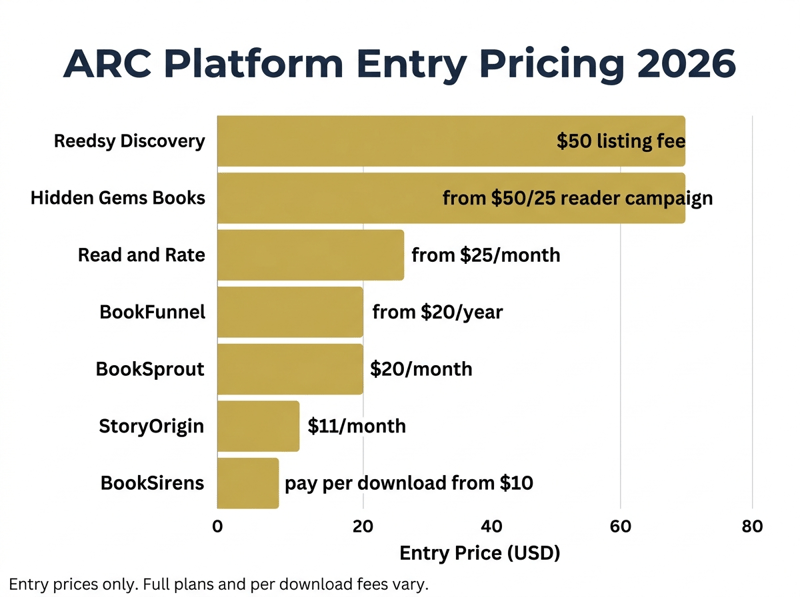
The smarter measurement is cost per surviving review. For a 100-review push, BookSprout often delivers volume but loses 30 to 60 percent of reviews to Amazon filters. Hidden Gems delivers fewer reviews, but a higher share survives because reviewers post organically without templated disclosure text. Run a test campaign on at least two platforms in your first 90 days, then track survival rate after 30 days, not at launch.
Amazon terms of service: why ARC reviews disappear from product pages
Amazon does not publish a clean rule that says BookSprout reviews are banned. What Amazon does enforce is a community guideline against reviews that appear to be part of a coordinated campaign, that lack independent reader voice, or that follow a templated structure. BookSprout itself addresses this concern in its own knowledge base article on Amazon compliance, arguing it stays within the rules. In practice, many authors still see reviews removed.
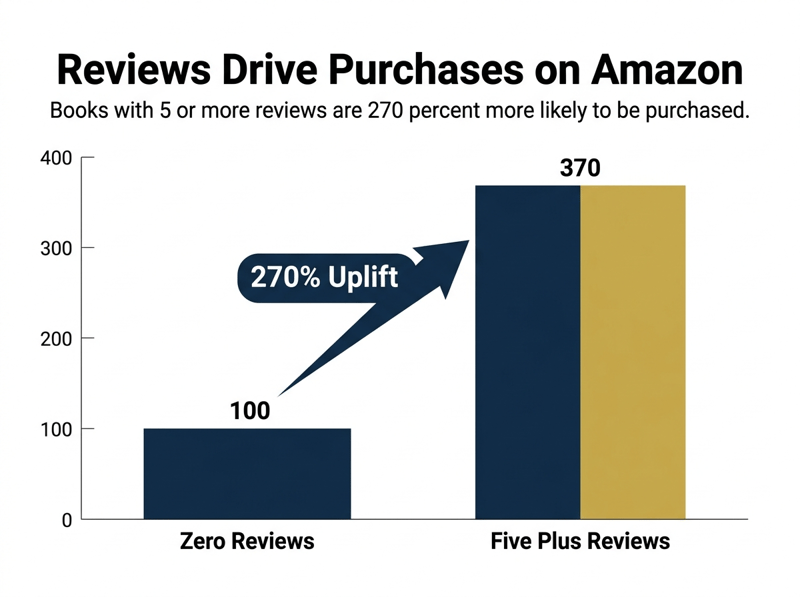
The fastest single move to improve survival is to stop using disclosure text that reads identically across every reviewer. Reputable platforms either let the reviewer write their own ARC acknowledgement in their own words, or omit the disclosure inside the review body and put it in the profile bio instead. According to recent industry data on review impact, a book with 5 or more reviews is 270 percent more likely to be purchased than a book with none, so review survival directly compounds into sales.
How to pick the right ARC platform for your launch
- Romance, thriller, fantasy launch needing 50+ reviews fast: stack BookSirens and Hidden Gems Books, with BookFunnel for delivery.||Literary fiction, memoir, non-fiction: lead with Reedsy Discovery for credibility, layer Read and Rate for multi-platform reach.||Long-running indie with a backlist and an email list: lead with StoryOrigin newsletter swaps and Voracious Readers Only for list growth.||Brand-new author with no list and a tight budget: start with Read and Rate (one subscription, free trial) and add BookSirens after the first 20 reviews land.||Books outside the BookSprout file limit (full-color non-fiction, graphic novels, 600+ page epics): skip BookSprout entirely. Use BookFunnel for delivery and Read and Rate for review collection.||Authors burned by Amazon review removal: prioritize platforms that allow multi-platform review collection and non-templated disclosure.
The wrong question is "which ARC platform is the best?" The right question is "which 2 or 3 platforms cover my genre, my budget, and the Amazon survival risk for my next launch?" Run a 60-day test with two platforms in parallel before you commit a full launch budget.
One overlooked factor: tracking. Without analytics that show review velocity, sentiment, and survival rate, you cannot tell whether a platform is actually working. Tools like book biometrics inside Read and Rate, or third-party trackers, turn vague impressions ("BookSprout felt slow this month") into hard numbers you can act on.
Common questions about BookSprout alternatives
Is BookSprout still worth using in 2026? Yes for short to medium romance and thriller ARCs distributed to a low-cost reader pool, especially if you only care about volume and you have a backlist that can absorb review removal. No if you need reviews that survive Amazon, if your book is outside their file limits, or if reviewer quality is your main complaint.
Which alternative gives the highest review survival rate on Amazon? Hidden Gems Books and Read and Rate report the highest survival rates among the 7 platforms above, both because of vetted reviewers and because reviews are not posted using identical templated disclosure text. BookSirens performs strongly on quality but is still Amazon-centric.
Can I use BookFunnel and BookSprout together? Yes. BookFunnel handles ARC delivery (file formats, password protection, expiration), and BookSprout pushes reviewers. Many authors run BookFunnel for the file delivery layer and a separate review platform on top. If you want both delivery and reviews in one subscription, Read and Rate covers both.
Are any of these platforms free? StoryOrigin has a usable free tier. BookFunnel has a low-cost annual plan. BookSprout offers a free plan capped at 20 downloads. Read and Rate offers a free trial of the full platform so you can run a real campaign before committing. Hidden Gems and Reedsy Discovery are pay-per-campaign with no free option.
Where Read & Rate fits in the alternatives map
Read and Rate started from a simple observation: every other ARC platform forces authors to glue together 3 or 4 tools (ARC delivery, review collection, watermarking, community, analytics). That fragmentation is expensive, hard to track, and slow to improve. Read and Rate bundles those layers into one product designed for indie authors, with vetted reviewers, automatic watermarking on every download, multi-platform review routing, and a private indie community for tip exchange.
For most indie authors evaluating BookSprout alternatives, the practical move is: keep one specialist tool that already works for you (BookFunnel for delivery, Hidden Gems for a romance push), then run Read and Rate as the central review and community layer. Start with the free trial, run a real launch through it, and judge by surviving reviews after 30 days.
"Reviewers who choose where to leave a review post more authentic content, and Amazon strips fewer of those reviews. That single design choice is why diversified ARC platforms outperform Amazon-only ones in 2026."