How to Get Amazon Book Reviews: The Complete Guide for Self-Published Authors (2026)

Amazon reviews are the single most important asset for self-published authors. They drive discovery, conversion, and algorithm placement — all at once. Here is
Why Amazon Reviews Are the Single Most Important Asset for Indie Authors
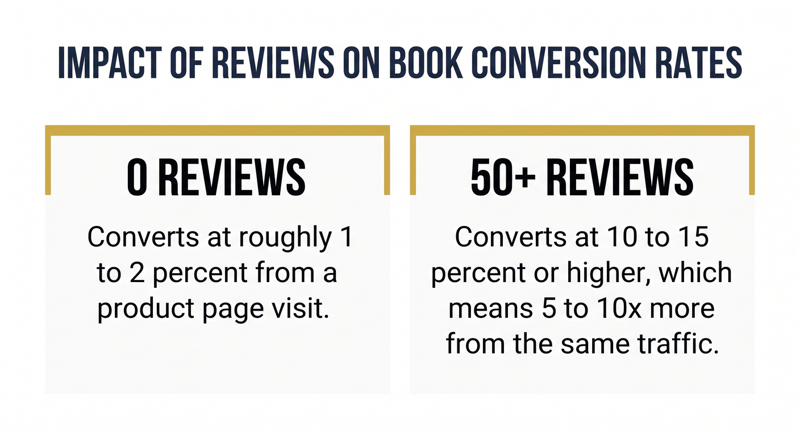
You can have a beautiful cover, a compelling description, and a solid marketing budget, and still watch your book collect digital dust. Amazon's A9 engine uses review count and rating to determine which books appear in search results, "Customers Also Bought" carousels, and sponsored recommendation spots. Books with fewer than 10 reviews are practically invisible. Books with 50+ reviews are in a different league entirely.
Amazon's Review Rules in 2026: What's Allowed and What Isn't
What IS allowed: asking readers to leave honest reviews, providing an ARC (Advance Review Copy) in exchange for an honest review, using legitimate review platforms and communities, and following up with readers post-purchase to request a review. The key phrase throughout Amazon's Customer Review Guidelines is "honest" and "unbiased." Authors publishing through Amazon KDP should review the Community Guidelines before any review strategy. You can ask for a review. You just cannot guarantee what the review says.
10 Methods to Get Legitimate Amazon Book Reviews
1. Build Your ARC (Advance Reader Copy) Team
The most sustainable review strategy is building an ARC list before your book launches. These are readers who get a free copy in exchange for an honest review posted around launch day. Build yours by adding a signup form to your author website, promoting it to your email list, posting in reader communities relevant to your genre, and mentioning it at the end of your previous books. Tools like StoryOrigin and NetGalley can help you manage ARC distribution at scale. Aim for 20–50 ARC readers for a first launch. Even if only 40–50% follow through, you will have enough momentum to rank on release day.
2. Use Your Back Matter Strategically
The best time to ask for a review is the moment a reader finishes your book. Add a dedicated review request page at the very end, after the last chapter and before any other back matter. Keep it short and personal: "If you enjoyed this book, please take two minutes to leave a review on Amazon." Include a direct link to your book's review section. The fewer clicks between the reader and the review box, the higher your conversion rate.
3. Leverage Your Email List
Your email subscribers are your warmest audience. After a launch, send a dedicated email to early readers asking for a review. Send it 5–7 days after they would have received the book, giving them time to finish it. A follow-up email 2–3 weeks later doubles response rates.
4. Engage Goodreads, Book Bloggers, and Social Media Creators
Goodreads Author Program readers are voracious, and many also post reviews on Amazon. Book bloggers and BookTok creators have built-in audiences who trust their recommendations. A micro-influencer with 5,000 engaged followers can drive more sales than an ad reaching 50,000 unengaged users. Pitch them a free copy in exchange for an honest review, never a guaranteed positive one.
5. Use a Legitimate Review Exchange Platform
Review exchange platforms connect authors willing to read and review each other's books. Done properly, where both parties commit to honest reviews rather than guaranteed 5-star ratings and the platform prevents direct tit-for-tat matching, this is fully within Amazon's guidelines. The key safeguard is anonymization: you should not know who reviewed your book, and they should not know you reviewed theirs.
6–10. BookBub, Libraries, KU Promotions, and Your Street Team
A BookBub Featured Deal gives your book visibility to millions of opted-in readers, and even a modest deal can permanently change your review count. Public libraries and book clubs put your book in front of passionate, review-writing readers. Kindle Unlimited free days paired with promotion sites like Freebooksy maximize downloads and downstream reviews. A dedicated street team of 10–25 super-fans who get early access in exchange for honest promotion is one of the highest-ROI long-term investments a self-published author can make.
How Many Reviews Do You Need to Rank?
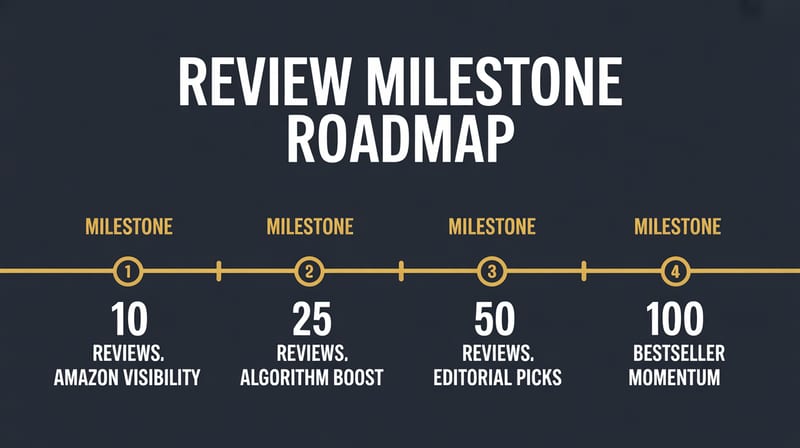
There is no magic number, but here are the benchmarks that matter. 0–9 reviews: your book will struggle to appear in organic search, so focus entirely on getting to 10. 10–24 reviews: you are visible and your ad ACOS improves significantly. 25–49 reviews: you appear in "Also Bought" carousels and word of mouth begins to compound. 50–99 reviews: you are competitive in most niches and can apply for BookBub. 100+ reviews: you are an established title that Amazon's algorithm trusts. The first 10 reviews are the hardest. Once you have 25, momentum builds naturally if the book is good.
How Legitimate Review Exchange Platforms Work
Review exchange platforms emerged as a legitimate response to the review gap between traditionally published and self-published books. Traditional publishers send out hundreds of ARCs to professional reviewers and media. Indie authors are on their own. On a compliant platform: you submit your book, reviewers browse and choose books that genuinely interest them, the platform manages matching so there is no direct reciprocity, reviewers read and post honest reviews on Amazon and other platforms you specify, and you earn credits by reviewing others' books which you spend to get reviewers for yours.
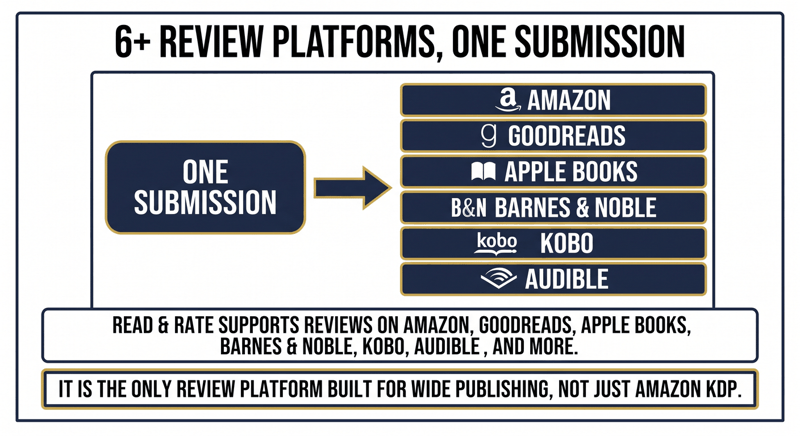
Read & Rate: The Most Complete Review Platform for Indie Authors
Review exchange platforms connect authors willing to read and review each other's books. Done properly, where both parties commit to honest reviews rather than guaranteed 5-star ratings and the platform prevents direct tit-for-tat matching, this is fully within Amazon's guidelines. The key safeguard is anonymization: you should not know who reviewed your book, and they should not know you reviewed theirs. Platforms like Read & Rate are built specifically around these compliance requirements.
Frequently Asked Questions
Can I ask friends and family to review my book? Amazon prohibits reviews from people who have a close personal or financial relationship with the author. Reviews from immediate family are often removed by Amazon's detection systems and can flag your account.
Do reviews from ARC readers count? Yes, as long as the review is honest and the reviewer discloses they received a free copy. Amazon allows reviewers to note "I received a free advance copy" in their review. This is standard practice in traditional publishing too.
What is the ideal review strategy for a new release? Combine ARC distribution (aim for 25–50 readers) with a review exchange platform like Read & Rate in the weeks leading up to launch. Coordinate your back matter review request, your email list follow-up, and any promotional campaigns so you are building review momentum from multiple sources simultaneously.
How many reviews do I need before running Amazon ads? Most experts recommend at least 10–15 reviews before running ads, with 25+ being ideal. Below 10, your conversion rate will underperform and your cost per sale will be high.