Kindle Book Reviews: How to Get More and Why They Matter
Everything self-published authors need to know about Kindle book reviews: why they drive Amazon rankings, how Kindle Unlimited borrows depend on them, and the s
Why Kindle Book Reviews Matter More Than You Think
When a reader lands on your Kindle book page, they do two things before deciding to buy: they look at the cover, and they check the reviews. In 60 seconds or less, your review count and star rating tell them everything they need to know about whether your book is worth their time and money.
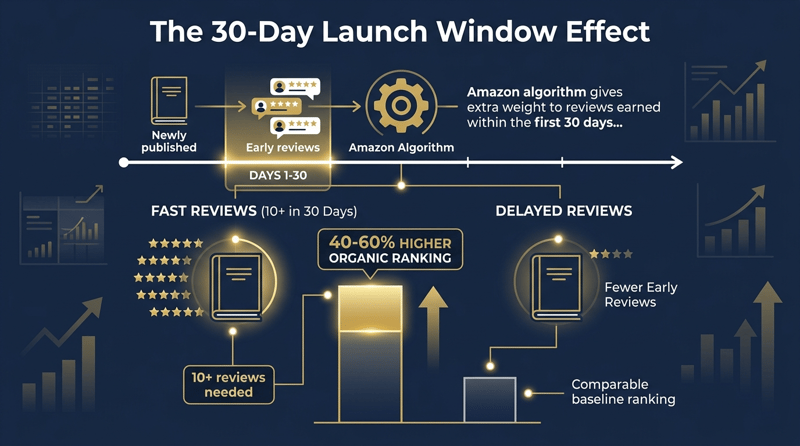
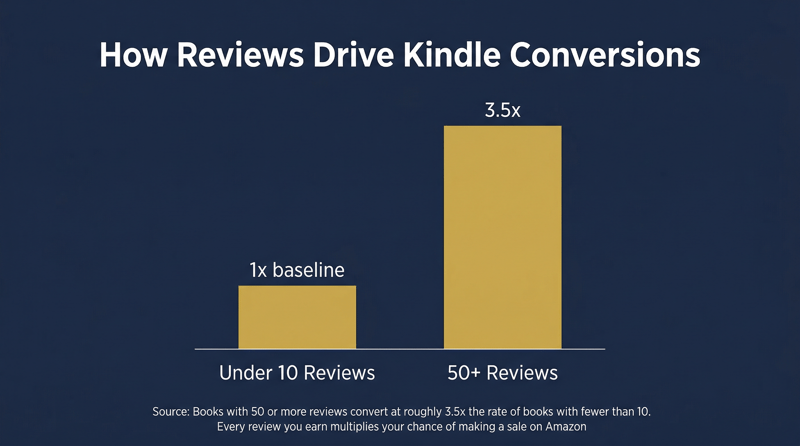
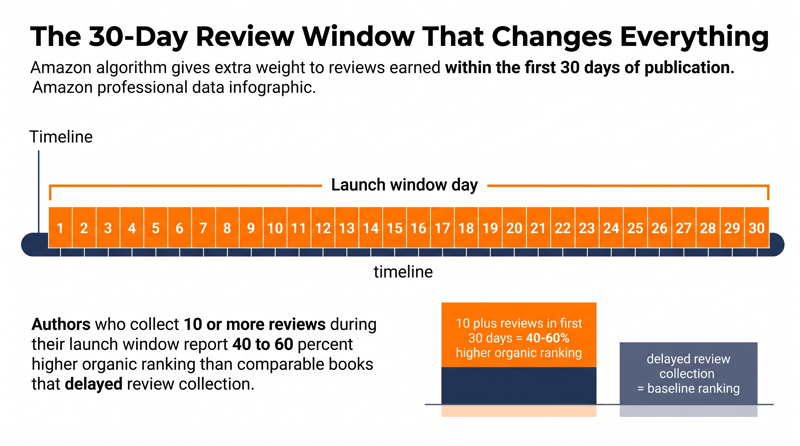
But reviews do not just influence readers. They influence Amazon's algorithm. According to Reedsy's breakdown of Amazon's ranking system, review count and recency are direct signals for search placement. A book with 50 reviews will consistently outrank a better book with 5 reviews, all else being equal. More reviews also improve your conversion rate, and Amazon rewards pages that convert by showing them to more shoppers.
The math is simple: reviews multiply every other marketing effort you make. They make your ads more effective, your organic ranking higher, and your social proof stronger. Getting more Kindle reviews is not a nice-to-have. It is the foundation.
Kindle Unlimited and the Review Connection
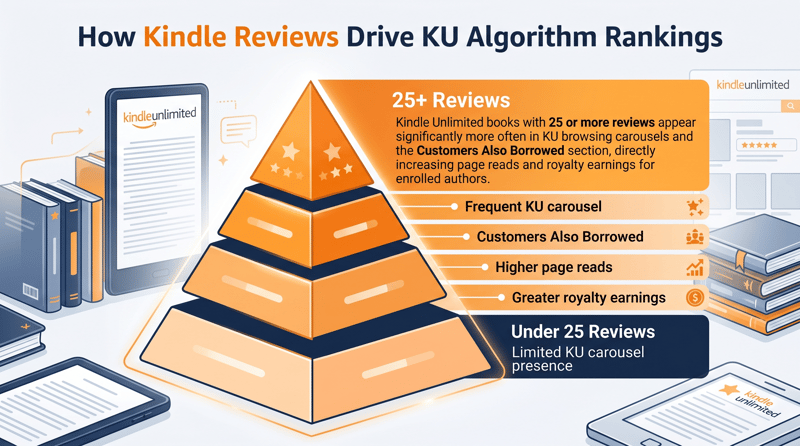
If your book is enrolled in Kindle Unlimited, reviews matter even more. KU readers browse differently from buyers. They are not spending money, so the barrier to choosing your book is lower, but the barrier to leaving a review is higher, since they do not feel the same buyer's remorse that motivates a refund-versus-keep decision.
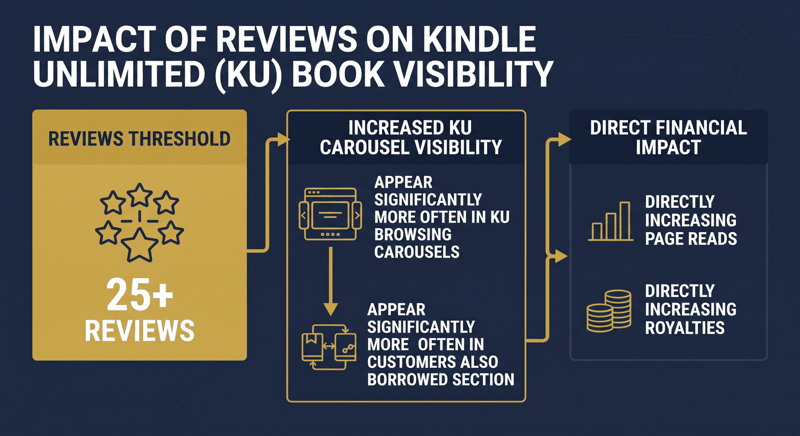
This means KU authors need a steady inflow of reviews to maintain visibility in the Unlimited catalog. Amazon's KU recommendation engine factors review signals into which books get surfaced to subscribers. A KU book with strong recent reviews gets recommended more. A book with stale or sparse reviews gets buried.
The practical implication: if you are in KU, you cannot treat review generation as a one-time launch activity. You need an ongoing system that keeps adding reviews month after month.
How to Get More Kindle Book Reviews: 5 Methods That Work
- Five proven methods to get more Kindle reviews:
- Build a launch team: recruit 15 to 25 readers before launch who commit to reading your ARC and leaving an honest review on release day
- Use your email list: send a simple personal email to your subscribers asking for a review after they read your book converts surprisingly well
- Run a BookFunnel ARC campaign: distribute advance review copies to vetted readers who have a track record of leaving reviews
- Join a community review platform: platforms like Read and Rate let you earn reviews from real readers in an ongoing, sustainable way
- Add a review request page at the back of your Kindle ebook, with a simple "If you enjoyed this book, please consider leaving a review on Amazon" with a direct link, formatted as a clickable URL
The Safest Way to Get Kindle Reviews in 2026
The elephant in the room: review swaps. You have probably seen Facebook groups where authors trade reviews, with the concept of "I review yours, you review mine." The problem is that Amazon actively hunts for this pattern. Per Amazon's Anti-Manipulation Policy for Customer Reviews, accounts that consistently review books from the same small group get flagged. Reviews get removed. In serious cases, reviewer and author accounts get suspended.
Read and Rate was built to solve this problem cleanly. Instead of a direct swap, the platform uses a credit system called InkDrops. You earn InkDrops by reading and reviewing other authors' books through the platform's organic discovery feed. You then spend those InkDrops to have your book reviewed by other members.
The key difference: there is no direct link between who you review and who reviews you. Amazon cannot detect a swap pattern because there is no swap. Reviewers find your book through organic search within the platform, read it using a securely watermarked PDF, choose the platform they want to review on (Amazon, Goodreads, Apple Books, Kobo, and more), and leave an honest review.
The result is reviews that look exactly like organic reviews, because they are organic reviews. Real readers, real opinions, real accounts with review histories.
How to Review Books for Free (And Earn Reviews Back)
If you are a reader as well as a writer (and most authors are), Read and Rate turns your reading habit into a marketing engine. Every book you read and review through the platform earns you InkDrops. Those InkDrops go toward getting your own book reviewed.
You can also read books entirely for free through the platform's secure PDF delivery system, which means you are getting paid in reviews to do something you would do anyway. It is one of the few genuinely win-win setups in the indie publishing world.
For readers who are not authors, the platform offers a way to access a wide range of self-published titles across genres before they are widely known, and give feedback that directly shapes whether those books find their audience. If you have ever wanted your opinion to matter to an author who will actually read it, this is where you go.
Whether you are an author looking to build your Kindle review foundation or a reader looking to discover new books and support indie authors, Read and Rate is the most efficient way to do both. For a broader look at indie publishing strategies and review best practices, Self-Publishing Advice from the Alliance of Independent Authors is a trusted resource.