The Artisan Author Strategy: Book Marketing in the 2026 Transformation Economy

A definitive white paper on the shift from algorithmic hustle to direct sales ecosystems. Analysis of the 'Artisan Author' model, AI-assisted productivity, and
The Transformation Economy: From Content Hustle to Strategic Focus
For the past decade, the dominant advice for independent authors was predicated on velocity: write fast, release often, and pray the algorithm favors your recency. As we settle into 2026, that model is showing distinct signs of failure. The market is currently experiencing a flood of AI-generated content, raising the noise floor to unprecedented levels. In response, discerning readers are retreating to trusted voices, ushering in what Joanna Penn defines as the 'Transformation Economy'. This economic shift values the *transformation* a book provides—whether emotional or intellectual—over the mere consumption of content.
This necessitates a fundamental change in operational tempo. The goal is no longer to outpace the algorithm but to outlast the noise. Strategic focus must shift toward building a robust, interconnected body of work (backlist) rather than chasing the fleeting visibility of a new release. The authors who thrive in this environment are those who treat their intellectual property as a compounding asset class rather than disposable inventory.
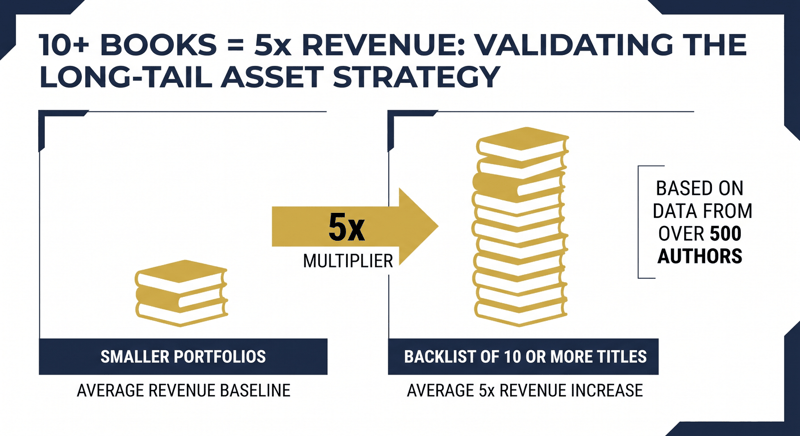
The data above underscores the futility of the "one-hit wonder" approach in the current climate. Revenue stability in 2026 is mathematically tied to the depth of the catalog. However, simply having a backlist is insufficient; one must actively manage it. PublishDrive’s 2026 forecast highlights the critical role of using AI tools not to generate new text, but to revitalize old inventory—updating metadata, refreshing covers, and optimizing keywords to keep legacy titles discoverable.
The Nuance: The 'Artisan' Metric
The term "Artisan Author" is not merely a branding exercise; it is an operational definition. It distinguishes the human creator from the AI generator. An Artisan Author focuses on "vibe creation"—the intangible emotional resonance that Large Language Models (LLMs) struggle to replicate. This involves a higher investment in premium packaging, limited editions, and high-touch community interaction.
While AI should be leveraged for productivity (outlining, ideation, administrative tasks), the core product must remain unmistakably human. The market has bifurcated: commodity content (served by AI) and premium experiences (served by Artisans). Attempting to compete in the middle is a death sentence.
The Architecture of Direct Sales
Perhaps the most non-negotiable shift for 2026 is the migration from retailer-dependency to direct-to-consumer (DTC) ecosystems. Relying solely on Amazon or Audible is now classified as a critical platform risk. The Direct Sales Case Study by Kindlepreneur demonstrates that authors who control the transaction not only retain higher margins but, more importantly, own the customer data. When you sell on a third-party platform, you are a supplier; when you sell direct, you are a business.
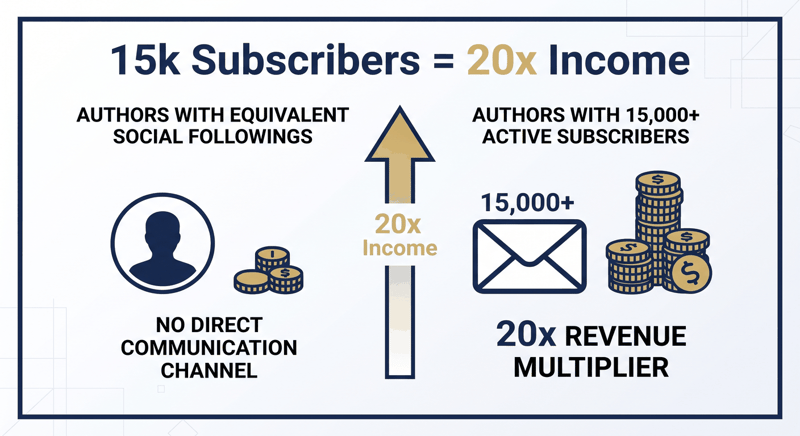
This infrastructure requires more than a PayPal button. It demands a sophisticated tech stack—typically Shopify or WooCommerce integrated with email marketing automation. The objective is to move the reader from a "rented" audience (social media followers) to an "owned" audience (email subscribers and customers). The efficacy of this move is not anecdotal; it is strictly quantitative.
The Nuance: The Email Valuation Multiplier
Many authors conflate "reach" with "revenue." They assume a viral TikTok video is equal in value to a newsletter signup. This is a category error. Social media reach is volatile and subject to algorithmic decay. Email lists are static assets with predictable conversion rates.
The valuation difference is staggering. A social follower is a passive observer; an email subscriber is a qualified lead. In the context of selling premium bundles, merchandise, or special editions, the email list is the only reliable engine for generating five-figure launch days without ad spend.
- Platform Independence: If Amazon changes payout rates (again), your direct store remains unaffected.
- Bundling Economics: You can increase Average Order Value (AOV) by upselling audiobooks at checkout—functionality impossible on major retailers.
- Instant Cash Flow: Direct sales provide immediate payout (T+2 days) versus the industry standard 60-day lag.
Algorithmic Discovery: The Evolution of BookTok
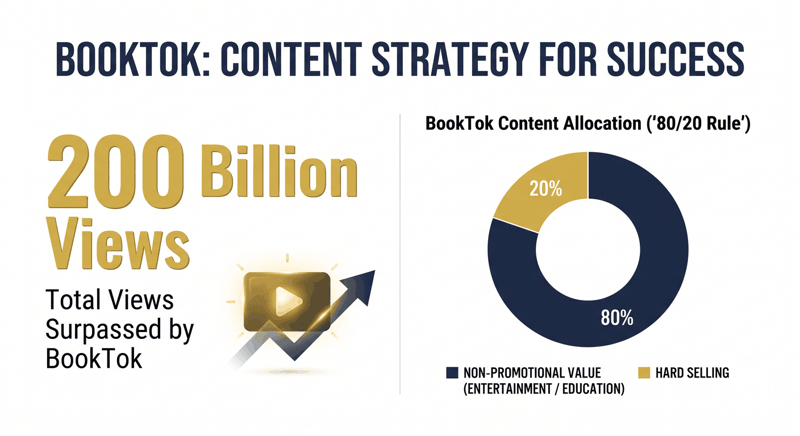
While direct sales handles the *conversion*, social media remains the primary engine for *discovery*. However, the "dancing point-of-view" videos of 2022 are obsolete. Manuscript Report's 2026 Guide indicates that the platform has matured into a search-driven utility. Readers are using TikTok and Instagram Reels as search engines to find specific tropes, aesthetics, and emotional payoffs.
The strategy for 2026 is "Authentic Long-Form." The algorithm has shifted to reward dwell time over loop counts. This favors authors who can speak articulately about their craft, the themes of their books, and the industry at large. It is a pivot from performative trends to substantive engagement.
The Nuance: Interactive Content
The most effective marketing assets in 2026 are interactive. This includes "Choose Your Own Adventure" style polls, trope-based quizzes, and behind-the-scenes live streams that allow readers to influence character names or plot points. This interactivity builds the "human connection" that defines the Artisan Author.
"In a world of infinite AI content, the premium product is human connection. - Joanna Penn, The Creative Penn"
Format Layering & IP Expansion
The final pillar of the 2026 strategy is "Format Layering." Current trends in book content show that releasing a single format (e.g., just the ebook) leaves substantial revenue on the table. The modern release schedule is a cascade: Direct-sold ebook first, followed by a special edition print run (Kickstarter or Shopify), and simultaneously, an audio experience.
Audio, in particular, has seen lowered barriers to entry due to high-quality AI narration. While premium titles still demand human voice actors, the mid-list and backlist can be profitably activated using AI narration tools, unlocking revenue streams that were previously cost-prohibitive to access. This 'layering' ensures that a single IP asset generates three to four distinct revenue checks.