The Post-Retail Era: Why Direct-to-Consumer is the Only Viable Book Marketing Strategy for 2026

The era of relying solely on Amazon is over. This white paper explores the shift to D2C ecosystems, the algorithmic volatility of BookTok, and the sovereignty o
The Collapse of Organic Reach on Retail Platforms
For the better part of a decade, the 'set it and forget it' strategy on major retail platforms was viable. You optimized your metadata, secured a few early reviews, and let the recommendation algorithms do the heavy lifting. That era is definitively closed. Retailers like Amazon have transitioned their real estate from merit-based discovery engines to 'pay-to-play' advertising networks. Organic visibility is now the exception, not the rule.
This shift forces authors into a precarious position: continue to erode margins by bidding on keywords against deep-pocketed publishers, or exit the race entirely. The volatility of reliance on third-party algorithms is a business risk that no serious enterprise, publishing or otherwise, should accept. As noted in recent industry analyses, the cost per click (CPC) for book-related keywords has nearly doubled in the last three years, effectively taxing author royalties before a single unit is sold.
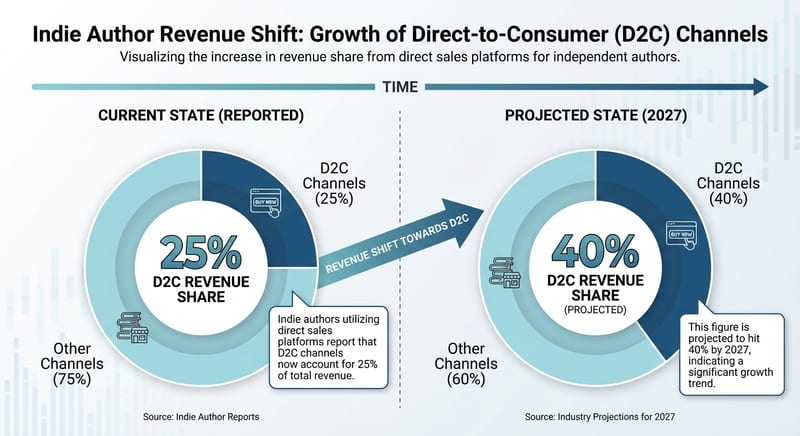
The data above highlights a migration, not just a fluctuation. Authors are not merely testing direct sales; they are building infrastructure around it. When you sell directly, you are not subject to the whimsical delisting or shadow-banning that plagues platforms. More importantly, you own the transaction data. This allows for retargeting, upselling, and lifecycle marketing that is simply impossible within the 'walled gardens' of major retailers.
However, this is not a suggestion to abandon retailers entirely. They remain powerful discovery engines. The strategic pivot lies in treating them as lead generation sources rather than the final destination for your most loyal customers. The goal is to move the reader from a low-margin environment (the retailer) to a high-margin environment (your ecosystem) as quickly as possible.
Sovereignty Over Speed: The Email List Renaissance
In the rush to capitalize on the latest social media trend (TikTok, Reels, or Threads), authors often neglect the most boring, yet most profitable asset in their portfolio: the email list. Social media is 'rented land.' You do not own your followers; the platform does. A policy change or an algorithmic tweak can sever your connection to your audience overnight. Email remains the only channel where you possess total sovereignty over the distribution of your message.
The misconception is that email is dead or dying. The reality is the opposite. As social feeds become increasingly fragmented and ad-heavy, the inbox remains a sanctuary of focused attention. Readers who subscribe to an author's newsletter have signaled a high level of intent. They are not scrolling past; they have invited you in. This distinction is critical for conversion rates.
Nuance: Deliverability vs. list Size
A common failure mode is obsessing over the vanity metric of 'subscriber count' while ignoring list hygiene. A list of 50,000 unengaged subscribers is a liability, not an asset. Internet Service Providers (ISPs) like Gmail and Outlook monitor engagement rates. If your open rates drop below industry thresholds, your emails will be routed to spam folders, regardless of the quality of your content.
Therefore, the technical nuance of 2026 is aggressive pruning. It is better to have 5,000 subscribers with a 50% open rate than 50,000 with a 5% open rate. The former ensures your emails land in the Primary tab; the latter guarantees the Promotions tab or worse. Smart marketers are now automating 're-engagement campaigns' that automatically purge inactive subscribers after 90 days of silence.
When managed correctly, email outperforms every other marketing channel by a significant margin. It is not about 'blasting' updates; it is about nurturing a narrative arc that parallels your books.
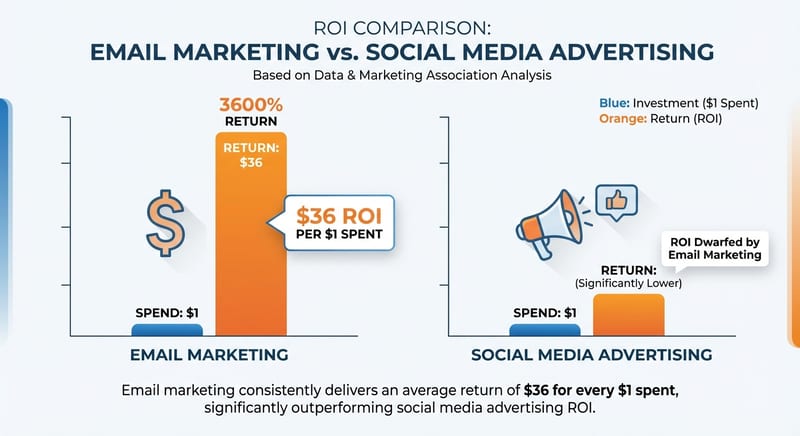
"Social media is for discovery. Email is for sales. Confusing the two is the most expensive mistake an author can make. - Jane Friedman, Publishing Expert"
The Audio-First Consumption Shift
Reading habits are changing physically. The 'share of ear' is competing aggressively with the 'share of eye.' With the ubiquity of smartphones and smart speakers, audiobook consumption has moved from a niche secondary format to a primary revenue driver for many genres, particularly non-fiction, fantasy, and thriller. If you are launching a book in 2026 without a simultaneous audio release, you are effectively ignoring 30% of the market.
The production barrier to entry has lowered, but the quality expectation has risen. AI narration is improving, yet for high-ticket or brand-building books, human narration remains the gold standard. The listener connects with the voice as much as the text. This parasocial bond creates a 'super-fan' dynamic that text alone struggles to replicate.
Furthermore, audio platforms are beginning to experiment with direct monetization models similar to podcasting. Authors are no longer bound to the exclusivity contracts of ACX/Audible. Wide distribution allows you to sell audiobooks directly from your website (via apps like BookFunnel), keeping 90%+ of the royalties rather than the standard 40%.
- Direct Sales: Utilize platforms like BookFunnel or Payhip to deliver secure MP3 files directly to customer devices.
- Spotify Integration: Ensure your catalog is available on Spotify Audiobooks, which is rapidly gaining market share.
- AI Narrated PoD: For backlist titles that don't justify a $3,000 studio investment, use high-end AI narration (like ElevenLabs) to monetize dormant IP.
High-Ticket Backend Monetization
The book is the front end; the business is the back end. This axiom has never been more true. In a saturated market, the price of a book (typically $9.99 to $29.99) rarely covers the cost of acquiring a customer (CAC) at scale. Successful author-entrepreneurs view the book as a 'loss leader' or a breakeven asset designed to acquire a customer who will eventually purchase higher-margin products.
This strategy changes the mathematics of marketing. If your average cart value is $15 (a single book), you cannot afford to spend $10 to acquire a customer. However, if your book leads to a $200 course, a $500 consultation, or a $50 monthly membership community, you can afford to outspend your competition significantly. The book builds the trust required to sell the high-ticket item.
Nuance: The Value Ladder Architecture
Constructing this 'Value Ladder' requires intentional design. You cannot simply slap a course onto a book and hope for conversion. The content of the book must intrinsically create the demand for the next step. Ideally, the book answers the 'What' and the 'Why,' while the backend product answers the 'How' and provides the 'Support.' This dichotomy ensures the reader feels satisfied with the book while recognizing the value of the upgrade.
For fiction authors, the 'high ticket' equivalent is often special editions, merchandise bundles, or exclusive Patreon/Substack tiers. The logic remains the same: a small percentage of your audience (the 'True Fans') is willing to pay significantly more for a deeper experience. Do not cap their spending ability by only offering a paperback.
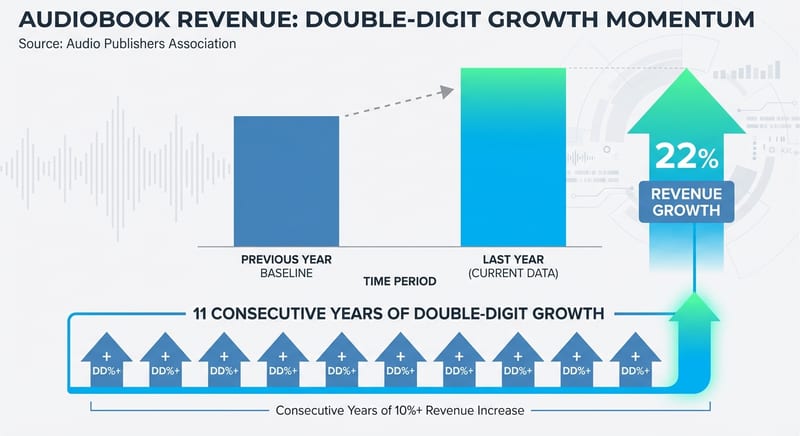
While the statistic above refers to audio, it reflects a broader consumer willingness to pay for premium formats. Whether it is audio or a premium course, the market is signaling a desire for depth and convenience over cheap ubiquity.
Collaborative Cross-Promotion Networks
Finally, the era of the 'lone wolf' author is over. The most cost-effective way to grow an audience in 2026 is through 'audience swapping' or newsletter cross-promotions. This involves partnering with authors in your exact sub-genre to recommend each other's books. It creates a closed-loop referral system that is immune to algorithmic interference.
Services like StoryOrigin and BookSweeps have industrialized this process, but bespoke partnerships often yield higher conversion rates. By vetting potential partners for list quality and brand alignment, you effectively inherit their trust. A recommendation from a favorite author carries infinitely more weight than a Facebook ad.
For data-backed research on direct-to-consumer strategies for independent authors, the Alliance of Independent Authors (ALLi) publishes annual earnings reports and platform comparisons. Jane Friedman's blog covers author email list strategy, direct sales platforms, and publishing business models in depth.