Self-Published Author Community: Where Indie Authors Actually Get Help (2026)

A practical, data-backed comparison of the 7 best self-published author communities in 2026, what to look for, what to avoid, and how to extract real value from
Why most self-published author communities fail you
Search 'best self-published author community' and you will land on a graveyard. Forums updated in 2019. Facebook groups full of pitch spam. Discord servers where 12,000 members watch 4 people talk. The pattern is brutal: most communities are large, dead, or both.
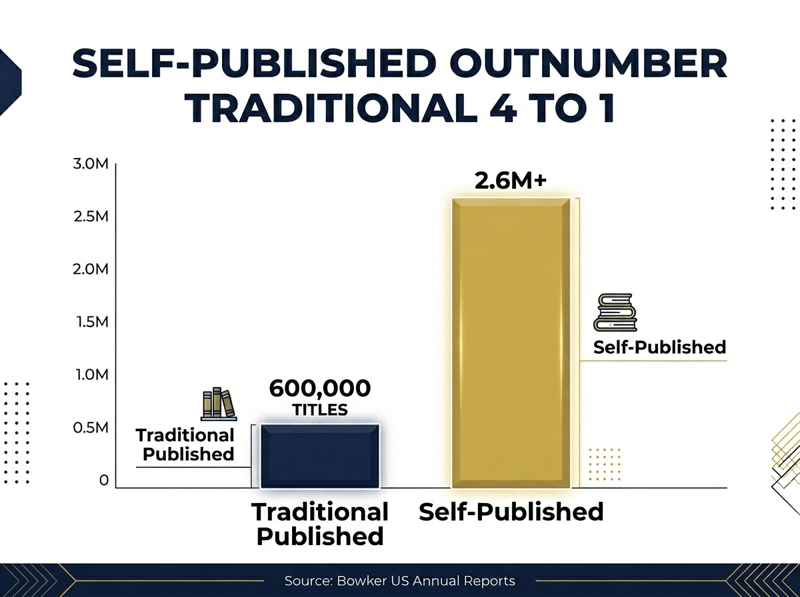
This is not a small problem. According to Bowker's annual self-publishing reports, more than 2.6 million self-published titles now receive ISBNs every year in the US alone, and that figure does not count Amazon-only releases through KDP. Indie titles outnumber traditionally published books by more than 4 to 1. The audience exists. The problem is finding the rooms where indie authors actually trade real strategies instead of trying to sell each other courses.
That scale matters because it changes what a community needs to deliver. In 2015, simply finding other indie authors was useful. In 2026, signal-to-noise is the only metric that matters. A 100,000-member group that posts 90% promotional spam is worse than a 500-member group with 50 active veterans answering questions every week.
What separates a useful community from noise
Before recommending platforms, here is the framework we use at Read & Rate to evaluate any author community. If a group fails three or more of these tests, leave it. Your time is the most expensive thing you own as a self-published author.
- Active veterans: Are there at least 5 to 10 members who have published 3+ books and reply to questions weekly?
- Promotion rules: Is self-promotion limited to a dedicated thread or day? If every post is a book pitch, the community is dead.
- Topic depth: Do conversations go past 'how do I get started' into pricing strategy, ad ROI, series structure, and platform updates?
- Moderator presence: Are scams, vanity press pitches, and review-buying offers removed quickly?
- Cross-genre balance: Useful for general advice. For genre-specific tactics, you need a separate genre community.
- Reciprocity culture: Members help each other before asking for help. Drive-by posters get ignored.
- Member outcomes: Can you find recent posts where members report concrete wins (rankings, revenue, reviews) tied to advice they got there?
The 7 best self-published author communities in 2026
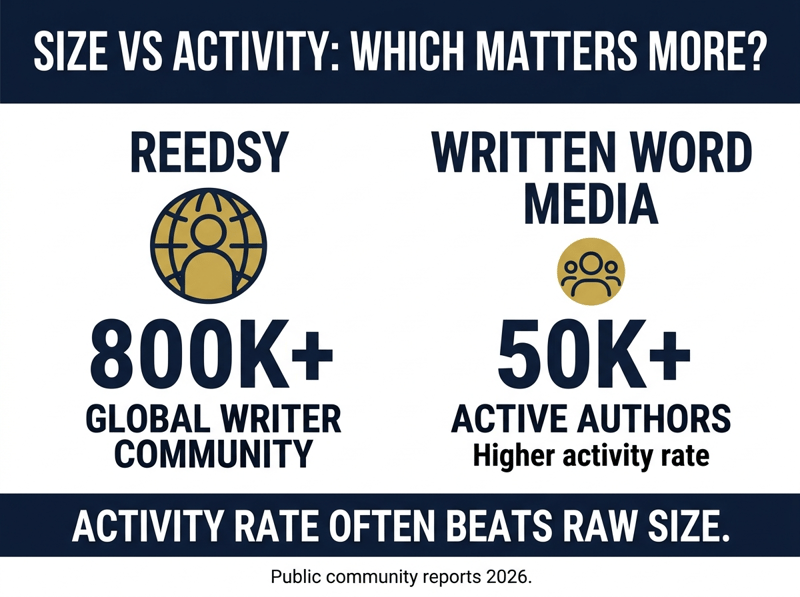
This list is ranked by the framework above, not by member count alone. A community with 500 active practitioners often outperforms one with 100,000 lurkers. Each entry includes who it is best for, what to expect, and the realistic time investment required to get value out of it.
1. Read & Rate Community Hub
Best for: Authors who want strategy plus a built-in review exchange that respects platform terms of service.
Most communities are conversation-only. Read & Rate combines an active discussion hub with the actual tools authors need: watermarked PDF distribution, multi-platform review collection (not just Amazon), private reviewer comments, and book biometrics that show how readers respond to your manuscript. Members can exchange honest reviews while staying inside Amazon TOS because reviews are routed through neutral readers, not direct trades. The community side is small enough to feel like a working room, not a stadium. Time investment: 30 to 60 minutes per week to extract real value.
2. r/selfpublish on Reddit
Best for: Tactical questions, sanity checks, and reading other authors' transparent post-mortems.
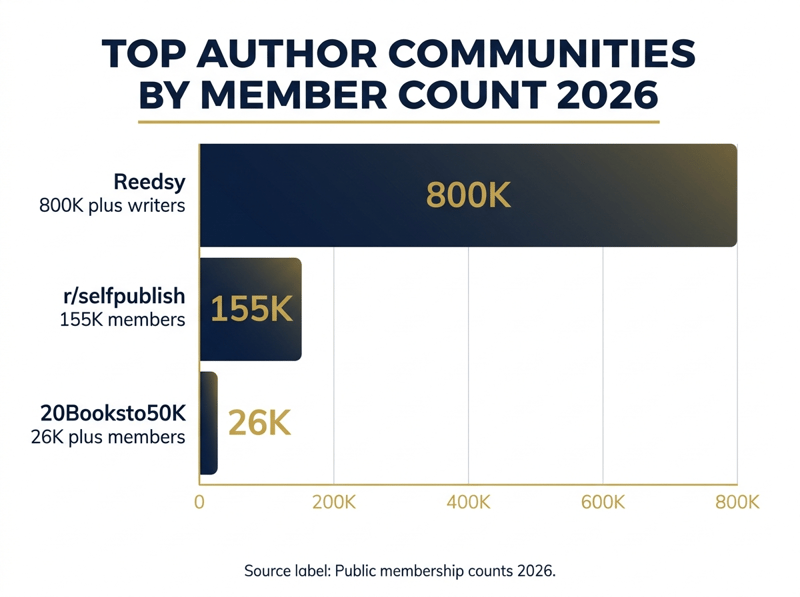
The r/selfpublish subreddit has grown to roughly 155,000 members and remains the most useful general-purpose forum for indie authors. The format works in your favor: questions get upvoted when they are good, scams get downvoted into oblivion, and search is genuinely useful for past threads. The weakness is depth. Many threads stop at the surface because experienced authors do not always stick around. Treat it as a high-volume Q&A and a place to read launch reports, not a deep mentorship community.
3. 20Booksto50K Facebook Group
Best for: Authors with at least one published book who are scaling to 5+ titles in a single genre.
The 20Booksto50K Facebook group is a private group built around one premise: write to market in a single genre, publish often, and let income compound. Membership has grown past 26,000 vetted authors, and the in-person conferences pull serious career indies. The strength is its tight focus on prolific genre publishing. The weakness is the same: if you write literary fiction, memoir, or one big stand-alone book every three years, the advice will not fit you. Apply only if you can answer their entry questions seriously.
4. Alliance of Independent Authors (ALLi)
Best for: Career-focused authors who want vetted vendor advice and ethics-first guidance.
The Alliance of Independent Authors is a paid professional association, not a free community. Membership unlocks a private forum of working authors, a watchdog rating system that flags predatory publishing services, and policy advocacy. If you have ever wondered whether a hybrid publisher is legitimate, ALLi has probably already rated them. The yearly fee filters out the noise that haunts free Facebook groups. Best fit for authors past the first-book stage who want fewer, deeper conversations.
5. Reedsy Community
Best for: Authors looking for editors, designers, marketers, plus weekly writing prompts.
The Reedsy ecosystem has grown into a global community of more than 800,000 writers, anchored by their weekly writing contests and a vetted marketplace of freelance professionals. The community side is more craft-focused than business-focused. If you need an editor or cover designer with verified credits, Reedsy is the most efficient path. If you want sales tactics and ad strategy, look elsewhere.
6. Kindlepreneur and Self-Publishing School Communities
Best for: Authors who learn well inside structured course-plus-community ecosystems.
Both Kindlepreneur (run by Dave Chesson) and Self-Publishing School (founded by Chandler Bolt) maintain communities tied to their training products. The advantage is that members tend to be at similar stages, so questions and answers track together. The honest caveat: the gravitational pull of these ecosystems is toward upselling additional courses. The free advice and tools, especially Kindlepreneur's blog and Publisher Rocket keyword research, are excellent. Use the free side first.
7. Genre-Specific Discord Servers
Best for: Genre fiction authors (romance, fantasy, thriller, sci-fi, LitRPG) who need tactics specific to their reader base.
General communities give general advice. The romance launch playbook is not the thriller launch playbook. The most useful tactical conversations of 2026 are happening inside private Discord servers run by mid-list and bestselling authors in each genre. These rarely advertise. You find them by being active in r/selfpublish, in 20Booksto50K, or in author conference channels until someone invites you. Once inside, the signal is unmatched. Active veterans share ad creatives, Amazon category strategy, and reader newsletter swap calendars in real time.
Comparison: which community fits your stage as an author
You do not need to join all seven. Picking one or two that match your current stage will save you 5+ hours per week. The best fit changes as your career progresses.
Pre-launch (no book published yet): r/selfpublish for fast tactical answers, plus Reedsy if you are hiring an editor. Stay out of paid groups until you have something to publish.
First book published: Add Read & Rate to start collecting honest reviews across multiple platforms, not only Amazon. This is the stage where reviews break or make momentum.
3 to 5 books in one genre: Apply to 20Booksto50K and start hunting for a private Discord in your genre. The general advice will not move your needle anymore.
Career indie (5+ books, treating writing as a business): ALLi membership for vendor vetting and policy advocacy, plus the genre Discord you earned your way into.
Red flags: communities that waste your time
- Pay-to-enter with no public proof: Legitimate paid groups (ALLi) publish member outcomes openly. Black-box paywalls are extraction schemes.
- Mandatory 'review swap' threads: Direct review exchanges violate Amazon TOS and can get your account suspended. Read our guide on how to get Amazon book reviews safely.
- One charismatic admin running everything: Healthy communities have multiple active veterans. Cult-of-personality groups collapse when the admin loses interest.
- Constant course launches: If 80% of pinned posts sell something, the community is a funnel.
- No moderation of obvious scams: Vanity press pitches that survive in the feed signal lazy or absent moderators.
- Aggressive ranking culture: 'Levels' or 'VIP tiers' that require posting volume reward noise, not value.
How to actually extract value from a community
Joining a community is not the same as benefiting from one. The authors who get the most out of these rooms behave very differently from the ones who burn out after three months. Here is the playbook that works.
- Lurk for 7 days before you post. Read the rules, the pinned threads, and the highest-voted posts of the past month. You will learn the culture and avoid asking questions that have been answered 50 times.
- Help three times before you ask once. Answer beginner questions in your area of strength. Reciprocity is real. People remember who showed up.
- Post specific questions, not vague ones. Bad: 'How do I market my book?' Good: 'Romance contemporary debut, $0.99 launch price, 47 reviews. CTR on AMS sponsored brand ads is 0.3%. What would you change first?'
- Save the wins. Keep a personal doc of advice that worked. The same community will recycle the same questions every quarter, and your saved playbook is more valuable than any new search.
- Limit yourself to 30 to 60 minutes per day. Communities are infinite scrolls by design. Set a timer. Leave when it ends.
- Audit your communities every 90 days. If a group has not produced one actionable insight in three months, leave. Your time has a cost.
Reciprocal reviews: doing them safely
The single most-asked question in every author community is 'how do I get more reviews?' The single most dangerous answer is 'let's swap.' Direct review exchanges between two authors violate Amazon's community guidelines and have been a leading cause of suspended KDP accounts since 2019.
The safe alternative is third-party routing through neutral readers. This is the model behind tools like NetGalley, BookSirens, and Read & Rate's reviewer network. Authors upload an ARC. Independent readers (not other authors trading reviews) download a watermarked PDF, read it, and post honest reviews on the platforms of their choice. There is no direct exchange between two authors, which keeps everything inside Amazon TOS. Compare options in our guide to Pubby alternatives and complete guide to ARC reviews.
How Read & Rate built a community that actually moves books
We built Read & Rate after watching too many friends in indie publishing waste two years inside Facebook groups, then quit because they had nothing to show for it. The lesson was simple. A community is only useful when it ships outcomes alongside conversations. So we wired the tools directly into the room.
Members can collect verified reviews on Amazon, Goodreads, BookBub, Kobo, and Barnes & Noble in one workflow, not five. PDFs are auto-watermarked at download so leaks are traceable. Reviewers leave private comments visible only to the author. The community side is for strategy and feedback, but it is not the only deliverable. The deliverable is reviews on your book, footage for UGC marketing videos, and a clean record of how readers actually responded to your manuscript page by page.
"A community without tools is a chat room. A community without strategy is a dashboard. The right room has both, and respects your time enough to limit itself to people who ship."
Frequently asked questions
Next steps for your author career
Pick one community that matches your stage today, commit to 30 minutes per day for the next 30 days, and ship one specific question per week. That is the entire prescription. If you are at the early stage and want a community plus the tools to start collecting honest reviews on multiple platforms (not just Amazon), Read & Rate gives you both in one place. The trial is free, and your manuscript stays watermarked from the moment you upload it.