The Market-First Manuscript: Advanced Book Marketing Strategies for 2026

A definitive white paper on shifting from 'author' to 'media operator.' We dissect the business case of the book proposal, the economics of email lists, and the
The Business Case: The Proposal as a Blueprint
In the world of non-fiction, and increasingly in genre fiction, a book is not merely a collection of chapters; it is a product requiring a business plan. This plan is formally known as the book proposal. According to Jane Friedman’s authoritative guide, a proposal argues the marketability of the work rather than just its literary merit. It is a document that forces the author to answer the uncomfortable question: 'Why does this book matter *now*, and who specifically will pay for it?'
The error most authors commit is conflating 'topic' with 'market.' A topic is what the book is about; a market is the group of people actively spending money to solve a problem related to that topic. A robust proposal identifies the gap in the market—the 'white space' that your specific expertise or narrative voice fills. Without this definition, marketing becomes a shouting match into the void rather than a targeted conversation.
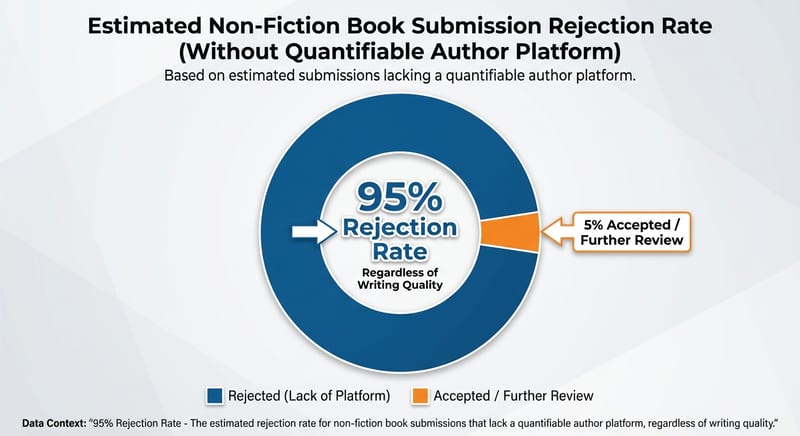
This statistic highlights a brutal reality: in the current publishing ecosystem, your 'platform'—your existing ability to reach and convert an audience—is often weighed more heavily than the manuscript itself. Publishers act as venture capitalists; they invest in assets with proven distribution channels. For self-published authors, the math is identical. You must be your own VC, and investing time in a book without a platform is a high-risk allocation of resources.
Nuance: The Platform-Content Paradox
A common misconception is that 'platform' equals 'social media followers.' This is a vanity metric. A true platform is defined by engagement and authority. It is the measure of your influence within a specific niche. As Friedman notes, for memoirs, the writing quality is paramount, but for prescriptive non-fiction, the author's credentials and visibility are the product.
The paradox lies in the execution: you need a platform to sell the book, but often the book is the tool used to build the platform. The solution is the 'simultaneous build.' You do not wait for the book to launch to build the audience. You build the audience by documenting the process of writing the book.
- Comparative Analysis: Identify 5-10 titles published in the last 3 years. How is yours different?
- Audience Psychographics: Move beyond demographics. What keeps your reader awake at night?
- Marketing Operations: Detailed plans for podcasts, speaking gigs, and guest posts.
Competitive Intelligence: Pre-Market Validation
Marketing begins with research, not promotion. Before a single word is drafted, the successful author conducts a forensic analysis of the landscape. Friedman outlines five critical research steps, starting with the bookstore shelf. Where would your book physically sit? Who are its neighbors? If you cannot answer this, you do not have a product; you have a manuscript.
This phase involves analyzing the 'digital footprint' of competing titles. Go to Amazon and read the 3-star reviews of the bestsellers in your niche. The 5-star reviews tell you what the market loves; the 3-star reviews tell you what the market is missing. That gap—the 'missing' content—is your marketing hook.
"If you write more, you write better. But if you research more, you sell better. - Synthesis of OnMyCanvas & Friedman Methodologies"
Nuance: Respecting the Genre Ecosystem
Nowhere is market respect more critical than in genre fiction. There is a tendency among literary writers to view genres like Romance or Thriller as 'easy' or 'formulaic.' This arrogance is a marketing death sentence. As discussed in LitHub’s commentary on romance novelists, readers are sophisticated. They know when an author is 'slumming it' for a paycheck.
Marketing to a genre audience requires authentic immersion. You must understand the tropes, the expectations, and the emotional payoff the reader demands. If you market a romance novel but fail to deliver the 'Happily Ever After' (HEA) because you wanted to be 'subversive,' you haven't innovated; you've broken a contract with your customer.
The Asset of Attention: The Owned Audience
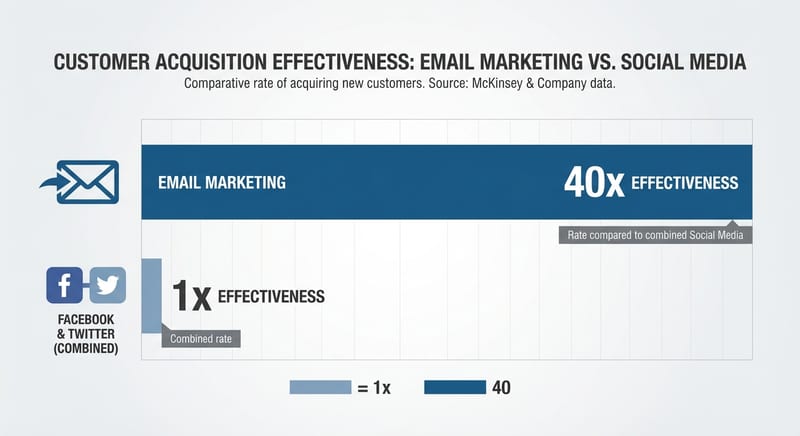
If the book is the product, the email list is the distribution center. Industry veterans like Jerry Jenkins consistently rank list-building as a top priority, often above the writing itself. Why? Because algorithms change. Facebook reach creates dependence; an email list creates sovereignty.
The strategy is simple but difficult: creating a 'Reader Magnet.' This is a piece of exclusive content—a prequel novella, a toolkit, a white paper—given away in exchange for an email address. This transaction must happen *inside* the book (front and back matter) and on your website. This converts a casual purchaser into a long-term lead.
Craft as Retention: The 'Show, Don't Tell' ROI
Marketing gets the reader to buy the first book; craft gets them to buy the second. The adage 'Show, Don't Tell' is not just artistic advice; it is an engagement metric. OnMyCanvas emphasizes using powerful adjectives and avoiding passive voice to keep the reader immersed. In marketing terms, 'immersion' reduces churn.
A book that 'tells' is a lecture; a book that 'shows' is an experience. Word-of-mouth marketing—the holy grail of book sales—only triggers when the reader has an emotional experience. Technical precision in editing, therefore, is a marketing expense. It is the R&D required to ensure the product works as advertised.
Nuance: The Daily Discipline of Visibility
Writing is often romanticized as a burst of inspiration, but marketing requires the grind of consistency. Jenkins advises establishing a writing habit that matches your goals. The same applies to visibility. You cannot market in bursts and expect sustained sales.
The 'Daily Discipline' implies that every day, you are doing something to push the flywheel. This could be writing 500 words, or it could be reaching out to one podcast host. The cumulative effect of these small actions outweighs the splash of a single launch day.
The Launch Vector: Momentum and Algorithms
The launch is not an event; it is a signal to the algorithms. Whether on Amazon or in a physical bookstore, velocity matters. The goal of a launch campaign is to compress sales into a short window to spike the charts. This visibility creates a feedback loop: higher ranking leads to more organic views, which leads to more sales.
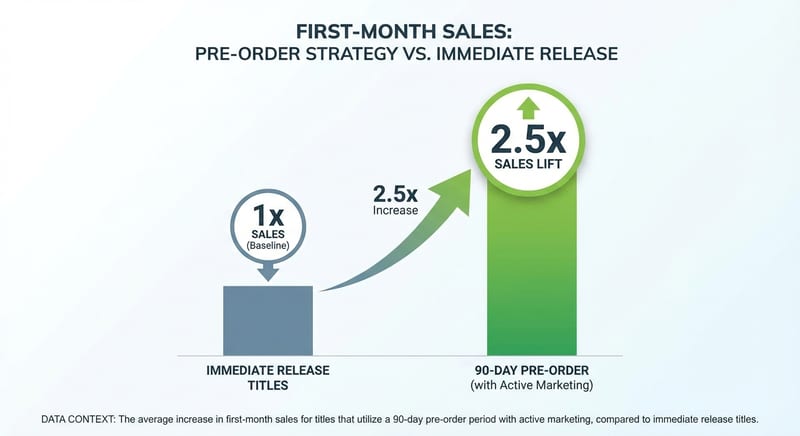
However, the 'Pre-Order' strategy is where the professional separates from the amateur. A long pre-order period allows you to accrue sales that all count toward your first week's ranking (in some charts) or populate the 'Also Bought' data before the book is even live. It allows you to troubleshoot your marketing copy before the stakes are highest.
In conclusion, book marketing is not a department you visit after the writing is done. It is the foundation upon which the writing rests. By adopting a proposal-based mindset, building an owned audience early, and respecting the commercial realities of your genre, you transition from a writer hoping for luck to a publisher engineering success.