Anatomy of a Bestseller: Deconstructing Real Author Success Stories in 2026

Beyond the 'hustle': A forensic analysis of how modern indie authors are achieving profitability through diverse revenue streams, data-driven keyword strategies
The Hybrid Revenue Model: Diversification as Defense
The era of the 'pure play' retailer author—who relies 100% on Amazon royalties—is closing. Successful authors in 2026 act more like media companies, diversifying their income streams to mitigate platform risk. Take the case of indie author Jenny Alexander, whose success wasn't defined by a single viral hit but by a consistent portfolio approach.
Alexander's strategy involves layering revenue: KDP provides the passive volume via Kindle Unlimited, while direct sales on platforms like Gumroad capture the high-margin 'superfan' purchases. This duality allows authors to benefit from the discoverability of the major retailers while building a war chest of liquid cash through direct transactions, where they keep 95% of the revenue rather than the standard 35-70%.
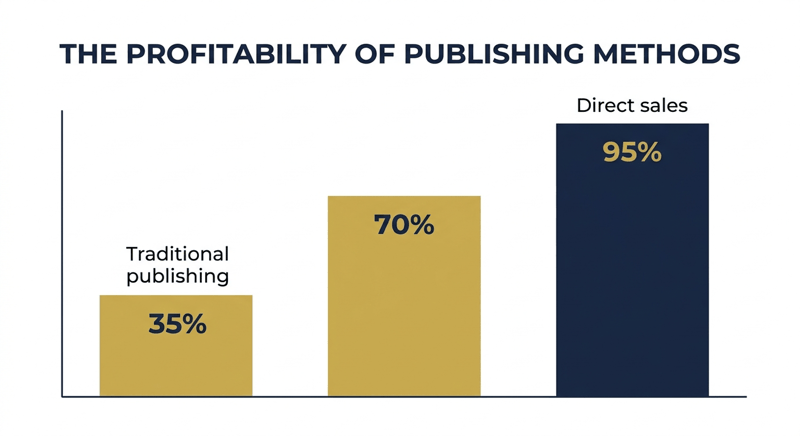
This margin expansion is critical because it funds the marketing machine. An author keeping $0.80 per book cannot afford paid ads. An author keeping $4.50 per book can aggressively bid on keywords, effectively buying their way to the top of the search results until organic velocity takes over.
Algorithmic Competence: The Keyword Moat
The romantic notion of 'writing a good book' is insufficient without the technical scaffolding to support it. Successful authors treat metadata as a competitive sport. Tools like Publisher Rocket are not optional; they are the sonar used to navigate the crowded ocean of Amazon's catalog.
By identifying low-competition, high-intent keywords, authors can position their books in 'blue ocean' categories. This is not about gaming the system; it is about accurate signaling. If you write 'Regency Romance with a Mystery Twist,' you must ensure your metadata signals that specific sub-genre to the algorithm, or you will be buried by generic romance titles.
The Economics of Quality: Investing in the Asset
One of the most persistent myths in self-publishing is that it is the 'cheap' option. In reality, it is the 'capital-intensive' option that yields higher equity. To compete with traditional houses, the product must be indistinguishable in quality. This requires upfront capital deployment into editing and design.
According to cost breakdowns for 2026, a professional edit can range from $2,000 to over $4,000. This is not a cost; it is CapEx (Capital Expenditure). Just as a manufacturing plant invests in machinery, an author invests in the manuscript. The cover, costing roughly $880 on average, is the packaging that determines the click-through rate (CTR).
The return on this investment is measured in 'Reader Lifetime Value.' A poorly edited book might sell a few copies via ads, but it will never generate read-through to Book 2. The high upfront cost acts as a filter, separating hobbyists from career authors who understand that quality is the only long-term retention strategy.
"Marketing falls on the author in both models... but self-publishing provides the control to execute it effectively. - Reedsy Comparative Analysis"
Case Study: The Visual Product
The visual component extends beyond the cover. Take the case of Anna Chernenkova, an artist who self-published her first book. Her success wasn't just in the text, but in the physical quality of the print product.
In an increasingly digital world, high-quality physical objects have become luxury items. Chernenkova's journey from concept to stocking shelves highlights a growing trend: the 'Artifact Book.' These are books designed to be displayed, not just read. For genres like art, cooking, or children's books, investing in premium paper stock and binding can justify a 2x or 3x higher price point, significantly boosting the average order value.
The Fan-First Philosophy: Disrupting the Model
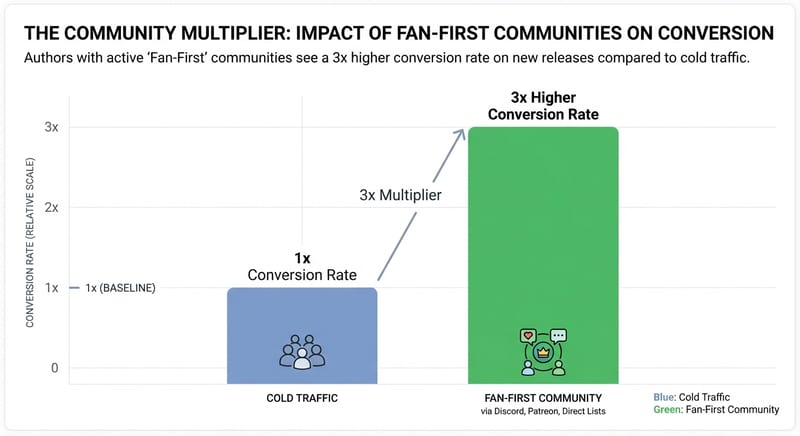
Perhaps the most radical shift in 2026 marketing is the adoption of the 'Fan-First' mentality, popularized by organizations outside of publishing. The Savannah Bananas case study, while sports-related, is being widely adapted by authors. The core tenet is simple: make every decision based on what delights the fan, not what optimizes the bottom line in the short term.
For authors, this means friction-free experiences. It means un-DRM'd files. It means selling bundles that make sense for the reader, not the retailer. It means responding to every email. This 'radical hospitality' creates a moat of loyalty that no algorithm change can breach.
This approach is deeply tied to the 'Profit First' methodology championed by Mike Michalowicz. By prioritizing profitability and fan connection over vanity metrics (like bestseller lists), authors build sustainable businesses that can weather economic downturns. It is a shift from 'growth at all costs' to 'profitability via loyalty.'
- Access: Give superfans early access to drafts or covers.
- Recognition: Name characters after loyal readers (as a contest reward).
- Value: Bundle digital assets (maps, character art) for free with direct purchases.
Defining Success on Your Own Terms
Ultimately, the case studies reveal that 'success' is subjective. For some, it is replacing a day job. For others, it is the creative validation of a physical book. The danger lies in adopting someone else's KPIs (Key Performance Indicators).
In 2026, the successful author is one who sets their own targets—whether that's $500 a month or $50,000—and reverse engineers a strategy to hit them, rather than blindly chasing the lottery ticket of a viral hit.