The Post-Funnel Era: Why 2026 Book Marketing is About Retention, Not Reach

Ad costs have killed the cold-traffic funnel. The 2026 playbook relies on 'Community Architecture'—subscription models, direct audio, and the monetization of th
The Collapse of the Cold Traffic Funnel
For a decade, the standard indie publishing advice was simple: write a series, run Facebook ads to Book 1, and rely on 'read-through' to profit. In 2026, this model is mathematically inverted. Privacy changes and AI-driven ad bidding have driven Cost Per Click (CPC) to unsustainable levels for low-ticket items like ebooks. As analyzed by Kindlepreneur, the break-even point for cold traffic has pushed many mid-list authors into the red.
The market response is a shift away from 'transactional marketing' (buy this book) to 'relational marketing' (join this ecosystem). Authors are no longer selling a commoditized file; they are selling access, curation, and identity. The goal is not to find 10,000 people to buy a $4.99 ebook, but to find 1,000 people willing to pay $5/month for a serialized experience.
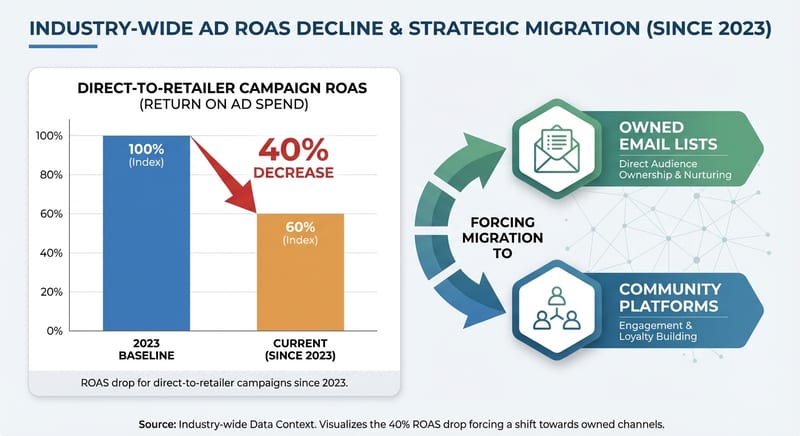
This degradation of ad efficiency is not a temporary fluctuation; it is the new baseline. Platforms like Meta and TikTok have prioritized video retention over outbound clicks, making it harder to move users off-platform. The strategic implication is clear: you cannot rent your audience anymore; you must own the infrastructure where they congregate.
Nuance: The Newsletter as an App
The humble email newsletter has evolved into a sophisticated content delivery application. Platforms like Substack and ConvertKit now allow for automation that mimics an app experience—delivering bonus chapters, character art, and audio clips based on user behavior tags. This is no longer just 'marketing communication'; it is part of the product itself.
Authors are treating their newsletters as 'Magazines' with editorial calendars, selling sponsorships, and offering premium tiers. The newsletter is the only algorithm-free zone remaining, making it the most valuable asset on the balance sheet.
The Subscription Economy: Recurring Revenue for Fiction
The most significant structural shift in 2026 is the normalization of fiction subscriptions. Platforms like Ream and Patreon have proven that readers will pay a recurring fee for early access to chapters. This model smooths out the 'feast and famine' revenue cycle of product launches, providing authors with predictable cash flow to reinvest in production.
This requires a shift in writing cadence. The 'binge' model (releasing one giant book a year) is antithetical to subscription retention. Successful subscription authors adopt a 'serialization' workflow, writing in shorter, cliffhanger-heavy installments that keep churn rates low. It is a return to the Dickensian model, updated for the mobile notification era.
"The subscription model turns a book from a one-time transaction into a relationship. It aligns the financial incentive with the creative output: keep them hooked, keep them paying. - Emilia Rose, Subscription Fiction Expert"
Nuance: Tiered Value Architecture
Implementing a subscription model requires careful 'Tier Architecture.' A common mistake is offering too much for too little, leading to burnout. The 2026 standard is a three-tier system: 'Digital Support' (early chapters), 'Physical Merch' (stickers/cards), and 'Executive Producer' (naming characters/consulting).
The data shows that while the lower tiers provide volume, the 'Whale' tiers (often priced at $50-$100/month) provide the margin. A single subscriber at the top tier is worth 20 ebook sales a month. This effectively subsidizes the acquisition of new readers.
The Audio Stratification: AI vs. Boutique
Audiobooks have surpassed ebooks in growth rate for five consecutive years. However, 2026 has brought a bifurcation. The market has split into 'Commodity Audio' (narrated by high-quality AI voices like Apple's digital narration) and 'Boutique Audio' (performed by celebrity narrators or full casts). Written Word Media reports that while AI audio dominates the backlist and non-fiction, fiction readers still pay a premium for human performance.
Marketing strategy must align with this split. You cannot market an AI-narrated book on 'performance'—you market it on 'accessibility' and price. Conversely, a human-narrated production is a luxury good. The narrator's name is now a keyword as important as the author's, often driving search traffic on platforms like Audible and Spotify.
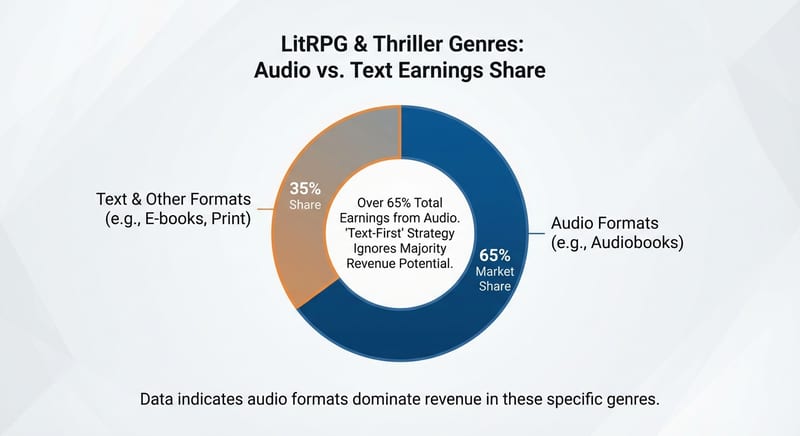
- Direct Audio Sales: Bypassing Audible's 60% cut by selling audio files directly via apps like BookFunnel.
- Spotify Streaming: Optimizing chapter titles for Spotify's algorithm to capture casual listeners.
- AI Dubbing: Using AI tools to translate audiobooks into Spanish and German to capture emerging markets cheaply.
Nuance: The Soundscape Experience
To compete with podcasts and gaming, 'Graphic Audio' (full sound effects and music) has moved from a niche to a standard expectation in Fantasy and Sci-Fi. Marketing these editions requires video assets—'audio grams'—that visualize the soundscape. A static image of a book cover is no longer sufficient to sell an audio experience; the marketing asset must play the hook.
Authors are partnering with sound engineers early in the process, sometimes composing themes before the book is finished, using the music to drive writing momentum and marketing hype simultaneously.
The Community Flywheel: Gamification of Loyalty
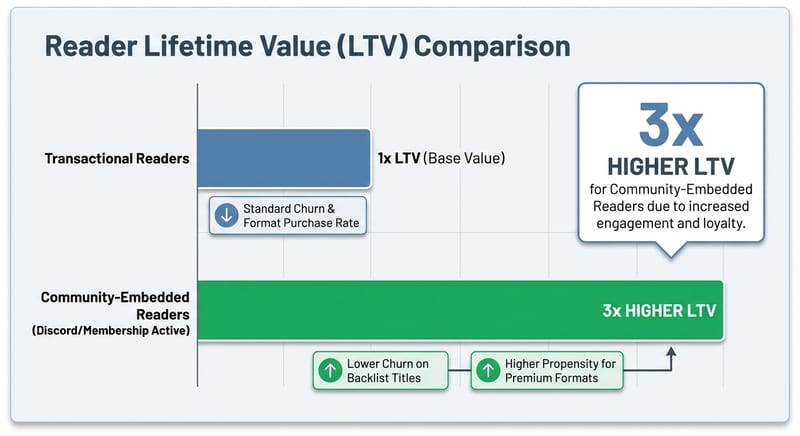
The final pillar of 2026 marketing is the 'Community Flywheel.' This concept replaces the linear funnel. Instead of pushing a reader to buy and leave, you pull them into a gamified ecosystem. Discord servers have replaced Facebook Groups as the hub of superfan activity. Here, readers don't just discuss the books; they participate in them—voting on cover art, naming minor characters, and unlocking 'achievements' for referring friends.
This peer-to-peer marketing is the only force capable of breaking through the AI noise. When a reader feels 'ownership' in the author's success because they voted on the plot twist, they become an evangelist. The marketing budget shifts from Zuckerberg's pocket to the community's pocket—in the form of giveaways, exclusive merch, and fan appreciation events.
Nuance: The 'Street Team' Evolution
The old 'Street Team' model (free book for a review) has been professionalized. In 2026, these are 'ARC (Advance Reader Copy) Armies.' Access is managed via proprietary forms and strictly monitored for compliance. If a member takes a book and doesn't review, they are purged.
Tools like Booksprout and StoryOrigin automate this tracking. The nuance is in the incentives—offering not just the book, but 'reputation' within the community. Gamifying the review process (e.g., 'Top Reviewer' badges in the Discord) taps into human psychology to drive compliance rates above 90%.