Beyond the Best-Seller List: Real-World Book Marketing ROI in 2026

We dismantle the 'viral hit' myth and analyze the actual unit economics of successful authors in 2026. From $25k community raises to the '11-Book Year' strategy
The Cost of Entry: Quantifying the Investment
To discuss marketing without discussing the cost of goods sold (COGS) is a futile exercise. The professionalization of self-publishing has raised the barrier to entry significantly. A book that looks 'self-published' simply will not sell in a market accustomed to traditional quality. Therefore, the first step in any marketing strategy is ensuring the product itself does not betray the marketing promise.
According to Reedsy's 2026 Financial Breakdown, the notion of publishing for 'free' is a fallacy for those seeking commercial viability. The competitive landscape demands professional editing, cover design, and formatting. These are not optional expenses; they are infrastructure costs. Without them, your marketing budget is effectively incinerating cash on a defective product.
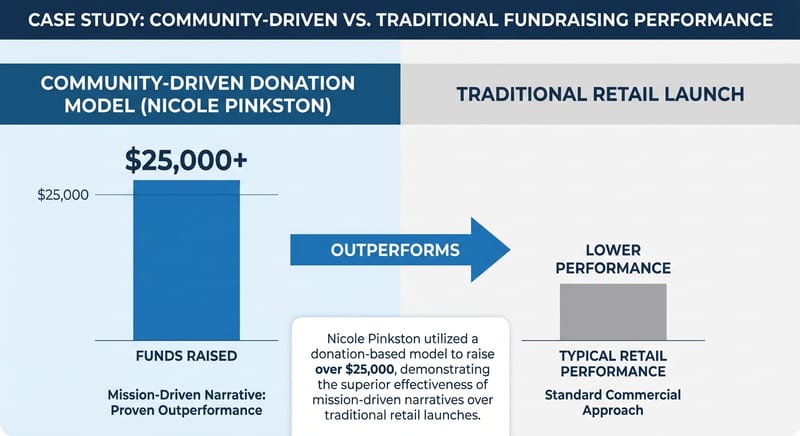
This data point is critical because it sets the ROI baseline. If your marketing strategy relies on selling e-books at $2.99, you need to move nearly 2,000 units just to break even on production. This reality checks the 'hobbyist' mindset and forces authors to adopt strategies that increase Average Order Value (AOV) or Lifetime Value (LTV), such as series bundles or direct sales.
The Nuance: The 'Marketing-First' Budget Fallacy
A common error is over-allocating funds to paid ads (Facebook, Amazon) before the organic foundation is set. Authors often spend $2,000 on ads for a book with a $50 DIY cover. The correct allocation in the 2026 landscape is 'Product-First.' The cover and the blurb are your primary marketing assets. No amount of ad spend can fix a low conversion rate caused by poor packaging.
As outlined in Manuscript Report's Launch Guide, savvy authors are 'front-loading' their effort 3-6 months pre-launch. They focus on organic metadata optimization—ensuring the book appears in search results for specific problem-solving queries—rather than relying on interrupted advertising.
- Allocation Rule: Spend 70% of budget on production (Edit/Cover) and 30% on Launch Promotion.
- Metadata: Research keywords using tools like Publisher Rocket before writing the description.
- Street Teams: Recruit 50 reliable reviewers instead of buying 5,000 impressions.
The Community-Funded Model: Beyond Royalties
The traditional transaction model—writer produces, reader buys—is being disrupted by the 'Patronage' and 'Mission-Based' models. In 2026, we see authors treating their publishing endeavors as community movements rather than retail product launches. This is particularly effective for non-fiction, faith-based, or cause-driven authors who can rally a tribe around a message.
This shifts the marketing narrative from 'Buy my book' to 'Support this mission.' The psychology of the donation or the high-tier pledge is different from a purchase; it is an identity signal for the buyer. This allows for revenue per reader that far exceeds the $4 royalty of a paperback.
The Nuance: The Donation-Based Pivot
The technical execution of this involves moving off-platform. You cannot run a donation campaign easily on Amazon. Authors are utilizing Substack, Kickstarter, or direct websites to facilitate these transactions. The key is transparency: showing exactly where the funds go (e.g., 'To distribute 500 copies to schools').
This strategy bypasses the algorithmic gatekeepers entirely. You are not begging an algorithm for visibility; you are asking your existing network for capital to expand that network.
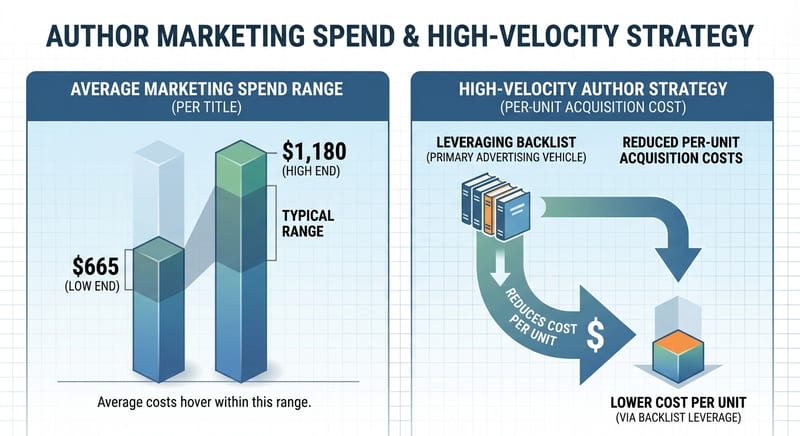
"“She didn't just sell a book; she sold a stake in the outcome. That is the difference between a customer and a partner.”"
Velocity as Strategy: The High-Frequency Release
In the algorithmic era, 'recency' is a ranking factor. A single book release has a marketing half-life of roughly 30 days. To maintain visibility without exorbitant ad spend, successful indie authors are adopting a 'Velocity' strategy—releasing content at a frequency that keeps the algorithm attentive. This does not always mean full-length novels; it can include novellas, short story collections, or companion guides.
Indie author Jenny Alexander's 2025 retrospective highlights the power of this approach. By releasing 11 titles in a single year, she created a 'flywheel' effect where each new release acted as a marketing event for the entire backlist. The marketing budget for Book 11 is effectively shared across Books 1-10.
The Nuance: Progress Over Perfection
This strategy requires a fundamental shift in mindset: abandoning the 'Magnum Opus' syndrome. The goal is to build an inventory of assets. Each book is a digital real estate asset that occupies search terms. The more assets you have, the wider your net for organic traffic.
The technical key here is 'Long-Tail Keywords.' With a large backlist, you can optimize each book for different, specific search queries (e.g., 'cozy mystery with cats' vs. 'cozy mystery with recipes'). This aggregates small streams of traffic into a river of revenue.
- Rapid Release: Write the series first, then release monthly to dominate the 'New Release' charts.
- Cross-Promotion: Every book's back matter must link to the next book in the series.
- Format Diversity: Turn that short story into a standalone ebook, a print anthology, and a lead magnet.
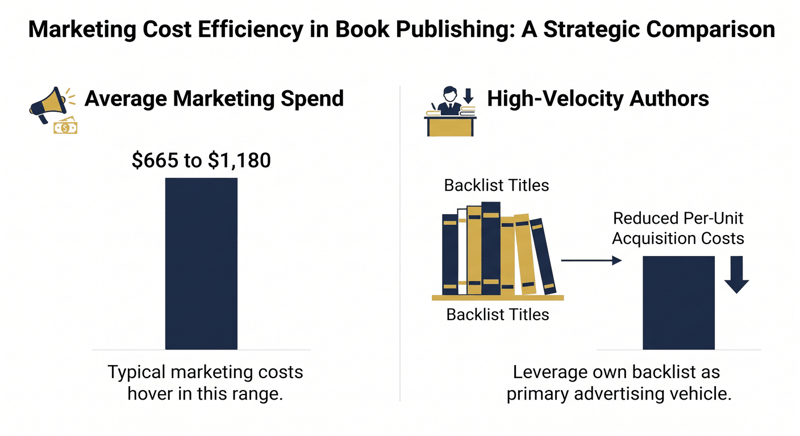
By relying on the 'New Release' boost from retailers rather than paid Facebook ads, high-frequency authors can sustain sales momentum with a lower direct marketing cost per title compared to authors who release once every two years.
Physical Product Diversification
Finally, the digital-first mindset often ignores the tactile value of physical goods. In 2026, we are seeing a resurgence in 'Merch-Book' hybrids. Authors are not just selling text; they are selling the aesthetic. Calendars, posters, and limited-run hardcovers are becoming significant revenue streams.
Case studies from PrintingCenterUSA demonstrate that authors—particularly in children's books and visual genres—are monetizing their IP through supplementary print products. A calendar featuring illustrations from your book series can often command a higher price point than the book itself, with better margins.
The Nuance: The Event Economy
This ties back to the 'Artisan' movement. When doing in-person events, having a table full of diverse, physical items (stickers, bookmarks, maps, posters) increases the conversion rate of passersby. Someone might not buy the $20 book, but they will buy the $5 print, entering your ecosystem.