The 2026 Book Marketing Manifesto: Strategies Beyond the Algorithm

A definitive white paper on the state of book marketing. We move beyond vanity metrics to explore audio-first ecosystems, the D2C imperative, and algorithmic so
The Audio-First Ecosystem
For decades, the publishing industry treated audiobooks as a secondary format, an afterthought to the hardcover release. That hierarchy has been inverted. In the modern attention economy, "reading" is increasingly synonymous with "listening." Authors who fail to prioritize high-production audio strategies are effectively ignoring the only growth sector in the industry.
This is not merely a preference shift; it is a structural change in how content is consumed. While print remains stable, it is a mature market. Digital audio, conversely, is in a hyper-growth phase, driven by the ubiquity of smartphones and the diversification of subscription models like Spotify and Audible. If your marketing strategy does not have an "audio-native" component, you are fighting for a shrinking slice of the pie.
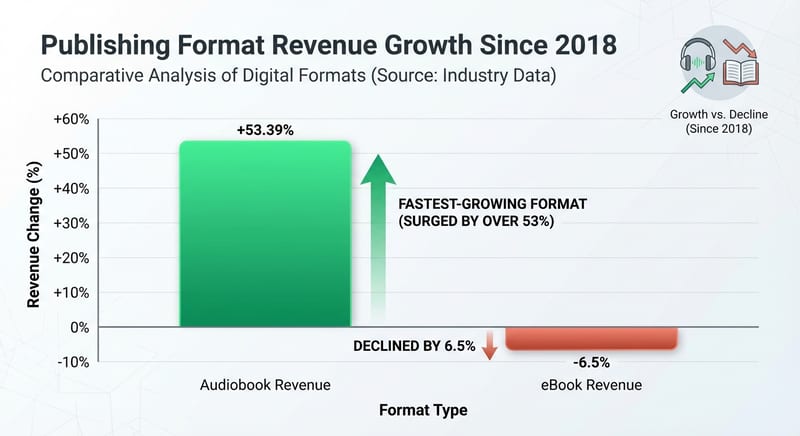
The implication of this data is stark: the growth is not in the eyes, but in the ears. Traditional book marketing relies heavily on visual mediums, including book covers on Instagram, unboxing videos on TikTok. However, the underlying sales data suggests that capital investment should shift from visual ads to audio production quality and podcast placements.
Nuance: The Narrator as Influencer
A critical technical detail often overlooked is the meta-data impact of the narrator. In 2026, the narrator is not just a voice actor; they are a co-brand. Listeners follow narrators (like Julia Whelan or Ray Porter) with the same loyalty they follow authors.
Marketing strategies must evolve to treat the casting process as a partnership. This means co-marketing agreements with narrators and optimizing metadata to ensure your book appears when users search for the voice, not just the writer.
- Audio Scripts: Rewrite non-fiction introductions specifically for the audio format to acknowledge the listener.
- Podcast Tours: Prioritize podcast appearances over guest blogging; the conversion rate from "listener" to "audiobook buyer" is significantly higher.
- Sample Optimization: The "Retail Sample" is your new book cover. Test multiple 5-minute clips to see which hook converts best.
Algorithmic Sovereignty (Amazon SEO)
We must dispense with the romantic notion that books are sold through word-of-mouth magic. They are sold through search queries. Amazon is not a store; it is a search engine with a credit card attached. The vast majority of book discoveries happen algorithmically, triggered by specific keywords and browsing behaviors.
This reality demands that authors stop viewing themselves as "creatives" and start viewing themselves as "data architects." Your book's metadata (keywords, categories, and subtitle) is more important than your launch party. If the algorithm cannot categorize your book, it cannot sell it.
Nuance: The 80% Rule
The dominance of a single retailer creates a single point of failure, and a single point of massive opportunity. While diversification is a sound business principle, the math dictates that you play where the volume is.
Ignoring Amazon's specific requirements for A+ Content, Series pages, and hidden keywords is essentially opting out of the majority of the digital market. You can dislike the monopoly, but you cannot market effectively by pretending it doesn't exist.
- Keyword Stacking: Utilize all 7 backend keyword slots with long-tail phrases, not single words.
- Category Sniping: Identify obscure sub-categories where you can achieve "Best Seller" status with fewer sales.
- A+ Content: Use the visual real estate below the fold to cross-sell your backlist.
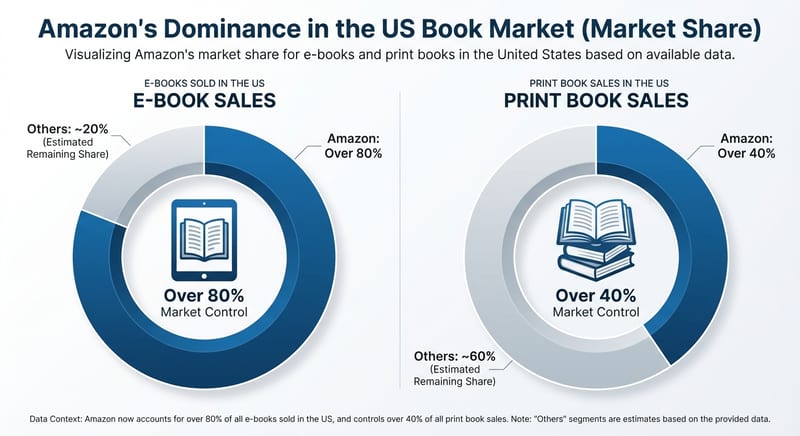
This statistic from industry reports confirms that "going wide" (distributing to all platforms) is often a philosophical choice rather than a financial one. For many authors, exclusive distribution agreements (like KDP Select) that leverage this 80% dominance offer a higher ROI than a fragmented approach.
The Direct-to-Consumer (D2C) Imperative
While Amazon owns the transaction, you must own the customer. The single greatest risk in modern book marketing is the lack of access to reader data. When you sell a book on Amazon, you do not get an email address. You get a royalty check and a blind spot.
The D2C imperative is about building a parallel funnel. It is not about replacing Amazon, but about ensuring that your most loyal readers (the "Whales") can transact with you directly. This allows for higher margins, immediate payouts, and most importantly, the ability to retarget them for future releases without paying a gatekeeper.
Nuance: The Friction vs. Margin Trade-off
The technical challenge with D2C is friction. Amazon offers "1-Click" buying; your website does not. To overcome this, your direct offer must provide value that Amazon cannot match. This is rarely price; it is exclusivity.
You cannot compete on logistics. You must compete on access. Signed copies, special editions, early access to chapters, and bundled digital assets are the currency of the D2C economy.
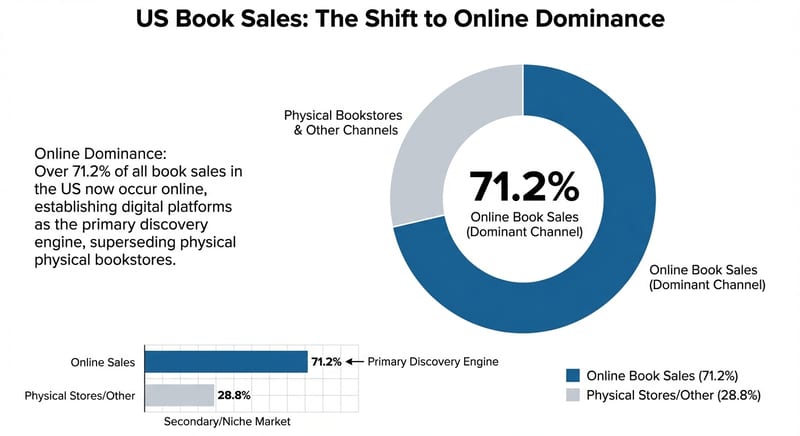
"The bookstore is now a showroom. The transaction happens on the phone, usually hours later. - Publishing Perspectives"
The Long-Tail Reality
The "New York Times Bestseller" list is a vanity metric that often bankrupts its pursuers. The real money in publishing is in the backlist. A marketing strategy focused solely on launch week is mathematically flawed because 90% of a book's lifetime revenue should come from years 2 through 10.
Successful 2026 marketing cycles are perpetual, not event-based. This requires automated email sequences, evergreen ad campaigns, and consistent content updates that keep older titles relevant. If you stop marketing a book six months after release, you have built a liability, not an asset.
For further reading on indie author marketing, the Alliance of Independent Authors (ALLi) publishes annual data on self-publishing earnings and platform performance. Jane Friedman's blog offers authoritative analysis on publishing industry trends and author business strategy.