The Sovereign Author: 2026 Book Marketing Strategies in the Transformation Economy
A definitive white paper on the shift from 'Information' to 'Transformation.' Learn why direct sales, AI asset management, and radical human connection are the
The Macro Shift: Entering the Transformation Economy
For two decades, the publishing industry operated on an information scarcity model. Authors curated knowledge, and readers paid for access. However, as noted in Joanna Penn’s 2026 strategic outlook, we have decisively shifted into the 'Transformation Economy.' With AI capable of synthesizing vast amounts of information instantly, the 'how-to' book is no longer a sufficient value proposition. Readers are drowning in content; they are starving for context, curation, and genuine change.
This shift requires a fundamental reimagining of the product. The book is merely the entry point—a gateway drug to a larger ecosystem of value. The successful author of 2026 does not merely sell a paperback; they sell a methodology, a community, and a verifiable result. The market no longer rewards the volume of words produced, but the depth of impact achieved. This is the difference between a $10 ebook and a $2,000 consulting retainer, both stemming from the same IP.
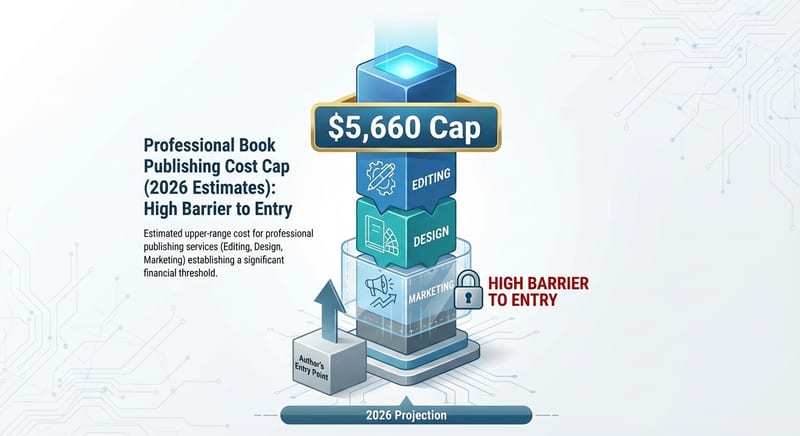
The data underscores a harsh reality: static text is experiencing rapid deflation. To combat this, marketing narratives must pivot from 'what you will learn' to 'who you will become.' The marketing funnel must be re-architected to upsell readers immediately from the low-margin book to high-margin transformation assets. The book is the marketing; the transformation is the business.
Infrastructure: The Direct Sales Imperative
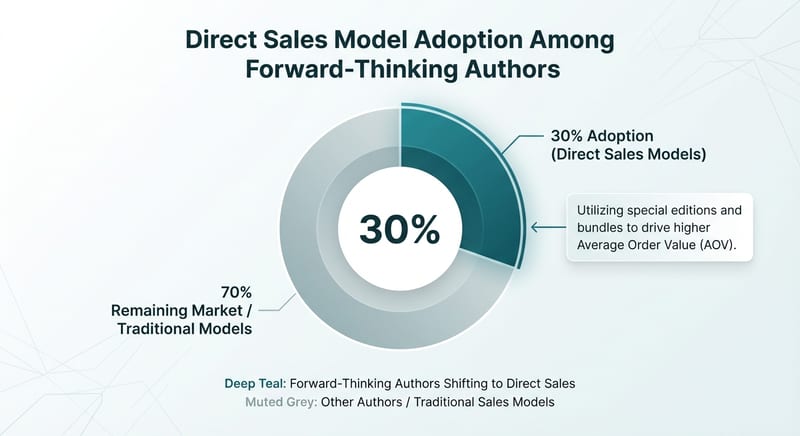
Relying on third-party retailers like Amazon as a primary storefront is a strategic vulnerability. PublishDrive’s 2026 predictions emphasize that successful authors are moving en masse to direct sales channels. This is not just about improved margins—though avoiding the 30-65% retailer tax is significant—it is about data sovereignty. When you sell on Amazon, Amazon owns the customer. When you sell direct, you own the asset.
Direct sales allow for 'pixel ownership'—the ability to retarget visitors on Meta and Google based on specific behaviors. It permits the sale of bundles (e.g., Audiobook + Ebook + Workbook) that retailers cannot support technically. Most importantly, it insulates the author's business from algorithmic volatility. If a retailer changes their ranking formula, the 'tenant' author is evicted; the 'sovereign' author remains unaffected.
Nuance: The Merchant of Record Complexity
The migration to direct sales is often stalled by the administrative terror of global tax compliance. Selling a digital file to a customer in the EU triggers VAT obligations; a sale in the US triggers state nexus laws. For a solo author, managing this is impossible.
However, the rise of 'Merchant of Record' (MoR) platforms like Lemon Squeezy and Paddle has solved this friction. These platforms act as the reseller, handling all liability, tax collection, and remittance for a nominal fee (usually 5%). This technical nuance is the key unlock for 2026: it allows an individual creator to operate with the global compliance infrastructure of a multinational corporation.
- Immediate Cash Flow: Stripe payouts occur in 2 days vs. Amazon's 60-day lag.
- Customer Enrichment: Ability to ask custom questions at checkout (e.g., "What is your biggest struggle?").
- Upsell Architecture: One-click upsells increase Average Order Value (AOV) by 30-50%.
- Format Agnosticism: Sell MP3s, PDFs, and EPUBs in a single zip file.
"Successful authors will prioritize direct sales through their own storefronts... avoiding the 'hustle culture' to focus on owned assets. - PublishDrive 2026 Report"
Asset Management: AI-Driven Backlist Revival
The 'backlist'—books published more than a year ago—has always been the profit engine of publishing. In 2026, AI tools have made backlist revitalization aggressively viable. As highlighted in Reedsy’s self-publishing guide, authors can now deploy AI to audit and update metadata, regenerate outdated covers, and even re-edit manuscripts for modern market expectations at a fraction of the historical cost.
This capability allows for a strategy of 'Continuous Launch.' Instead of a book fading into obscurity, it can be cyclically refreshed. An author can re-release a 2020 title with '2026 Updated Edition' branding, fresh keywords, and a new AI-narrated audiobook, effectively treating old IP as new inventory. This is the difference between letting an asset depreciate and actively managing a portfolio.
Nuance: The Global Translation Scale
Historically, selling translation rights was a slow, low-margin affair involving agents and foreign publishers. Today, AI translation tools (like DeepL paired with human editors) allow authors to publish directly in German, Spanish, and French simultaneously. The nuance lies in 'AI-Assisted, Human-Verified' workflows.
The strategy is not to rely on raw AI output, which lacks cultural idiom, but to use AI to complete 80% of the heavy lifting, hiring a human editor for the final 20%. This reduces the cost of entry into a new language market from thousands of dollars to hundreds, making it ROI-positive to test smaller markets like Portuguese or Italian.
The Human Moat: Unscalable Intimacy
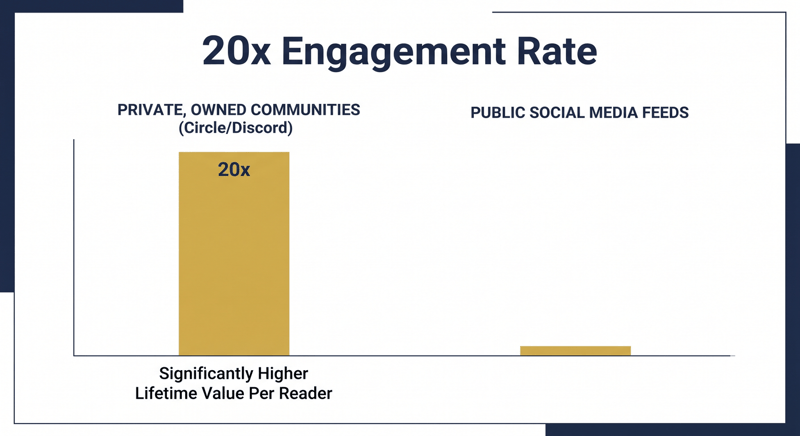
As AI content floods the market, 'human connection' becomes a scarce, premium asset. The Tech Comm predictions for 2026 suggest that while automation will handle information retrieval, it cannot replicate trust. Therefore, marketing must pivot from 'broadcasting' to 'community building.' The most powerful marketing channel in 2026 is not an ad platform, but a private community (e.g., Circle, Mighty Networks, Substack).
This strategy involves 'doing things that don't scale.' Live Q&A webinars, direct email replies, and physical meetups create a loyalty moat that AI cannot breach. Readers may come for the information, but they stay (and pay) for the access to the author. This shifts the revenue model from transactional (selling a book) to relational (selling membership).
Nuance: The Rise of 'Sovereign Communities'
Social media groups are 'rented land.' Facebook or LinkedIn can deprecate your group or throttle your reach overnight. The nuance here is moving your most engaged readers off social platforms entirely and into owned community spaces. This requires a dedicated platform strategy.
While the friction to join a new platform is higher, the quality of engagement is exponentially better. A community of 500 dedicated readers in a private Slack or Discord is worth more than 50,000 passive followers on Instagram. These 'Sovereign Communities' become the testing ground for new ideas, the beta readers for new drafts, and the street team for new launches.
Discovery Logistics: Metadata as the New Cover
In a digital-first world, a book is data before it is prose. Jane Friedman’s analysis of book proposals highlights that market fit is a technical argument, not just a creative one. In 2026, mastering metadata—keywords, categories, and subtitle optimization—is the primary lever for organic discovery.
The algorithms powering Amazon, Google, and Library systems rely on these data points to match books with readers. An author who neglects metadata is invisible. The modern marketing workflow involves using tools like Publisher Rocket or KDSPY not just once, but quarterly, to adjust keywords based on trending search terms. This 'SEO for Books' approach ensures that your title remains relevant to the current search intent of the market.
- Subtitle Agility: Updating non-fiction subtitles to match current trending problems (e.g., changing 'Remote Work' to 'Asynchronous Management').
- Category Hacking:Identifying low-competition categories to secure 'Bestseller' flags.
- Series Metadata: Ensuring read-through by optimizing back-matter links and series grouping in KDP.
Conclusion: The Author as CEO
The romantic notion of the solitary writer waiting to be discovered is extinct. The 2026 landscape demands an 'Author-CEO' mindset. This requires a shift from passive distribution to active ecosystem management. It demands technical competence in direct sales, strategic foresight in asset management, and emotional intelligence in community building.
Those who embrace the 'Sovereign Author' model—controlling their data, their production, and their customer relationships—will find unprecedented freedom and profitability. Those who refuse to adapt will find themselves competing with zero-marginal-cost AI content in a race to the bottom. The choice is no longer about how well you write; it is about how well you run the business of your writing.