Beyond the Best-Seller List: The Definitive Guide to High-ROI Book Marketing Strategies

Stop chasing vanity metrics. This exhaustive white paper details the platform-first strategies, algorithmic optimization, and global distribution tactics that a
The Platform-First Paradox: Why 'Selling' Fails
The most common failure mode for authors is viewing marketing as a post-production activity. Scribe Media’s analysis suggests that effective marketing actually begins before a single word is written. This is the 'Platform-First' paradox: to sell the book, you must stop trying to sell the book and instead sell the value proposition of the author. When authors prioritize direct sales over relationship building, they commoditize their work.
A book is not merely a product; it is a lead magnet for a larger brand ecosystem. Whether the goal is speaking engagements, consulting contracts, or simply a loyal fiction readership, the asset is the audience, not the manuscript. By identifying the specific problem your book solves—or the specific emotional experience it provides—you transition from a vendor to an authority.
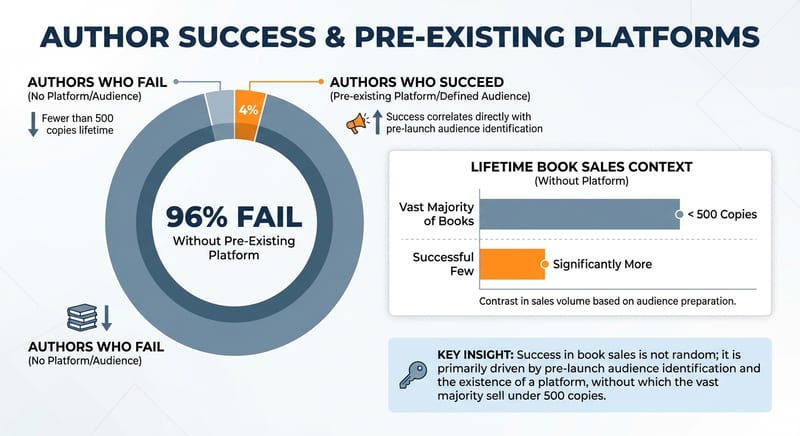
This data point underscores the necessity of the 'pre-work.' Strategies such as guest posting, podcast appearances, and LinkedIn thought leadership must precede the book launch by months, if not years. You are not building hype; you are building trust. When the book drops, it should be the validation of a reputation that already exists.
Algorithmic Sovereignty: Mastering Amazon SEO
Amazon is not a bookstore; it is a search engine with a credit card attached. Treating it as anything else is professional malpractice. As highlighted by Kindlepreneur’s deep dive into Amazon tactics, the battle for sales is won or lost in the metadata. If your book does not appear when a user types a specific problem into the search bar, it effectively does not exist.
This requires a shift in mindset from 'creative titles' to 'discoverable keywords.' While a poetic title appeals to the ego, a keyword-rich subtitle appeals to the algorithm. The optimization of these seven backend keyword slots, along with category selection, dictates your organic visibility more than any paid ad campaign ever could.
Nuance: The Conversion Rate Tipping Point
However, traffic without conversion is a vanity metric that will eventually punish your ranking. Amazon’s A9 algorithm monitors your 'click-to-purchase' ratio. If you succeed in driving traffic via SEO but fail to convert that traffic due to a poor cover or weak description, Amazon will actively demote your listing. High traffic with low sales signals irrelevance.
Therefore, before scaling traffic, you must audit your conversion assets: A+ Content, editorial reviews, and the 'Look Inside' feature. These elements act as the silent sales team that convinces the browser to become a buyer.
- Keyword Stacking: Placing high-volume keywords in the subtitle and series name for maximum indexing.
- Category Sniping: Identifying niche categories with lower competition to secure a 'Best Seller' badge.
- A/B Testing: Routinely swapping book descriptions to monitor conversion rate fluctuations.
"Amazon doesn't care if your book is good. It cares if your book converts. - Dave Chesson, Kindlepreneur"
The Launch Team Ecosystem
The 'lone wolf' author myth is dead. Successful launches are community events. Self-Publishing School’s Launch Blueprint identifies the 'Launch Team' as the single most critical variable in a book’s commercial success. This is a dedicated group of 50-200 readers who receive an Advance Reader Copy (ARC) in exchange for an honest review on launch day.
The strategic value of a launch team is not just warm fuzzies; it is algorithmic manipulation. A sudden influx of verified reviews within the first 48 hours of publication triggers Amazon’s 'Hot New Release' flags, propelling the book into organic recommendation engines. Without this coordinated 'review storm,' a new book languishes in obscurity.
Nuance: The 'Soft Launch' Buffer
A common error is executing a 'Hard Launch' immediately. Smart marketers utilize a 'Soft Launch'—publishing the paperback version 3-5 days before the official marketing push. This quiet period allows the launch team to post reviews so that when the general public arrives on the official launch day, the product page is already populated with social proof.
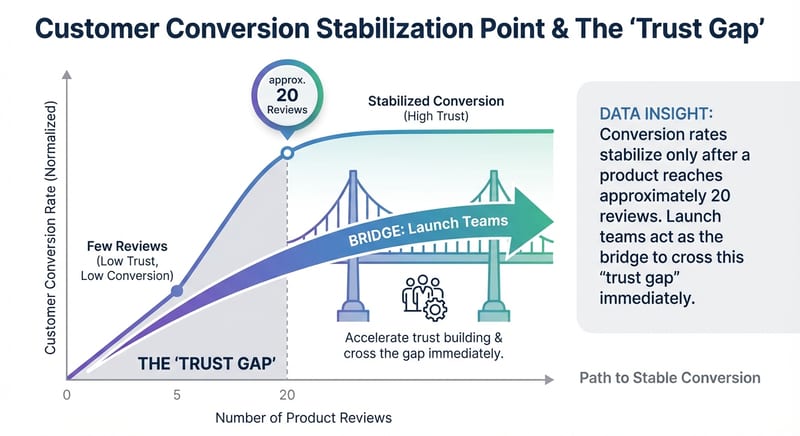
Sending traffic to a page with zero reviews converts at a fraction of the rate of a page with even five reviews. The Soft Launch is the insurance policy against wasted ad spend.
Community Engagement Over Advertising
For authors without a massive budget, Reedsy’s marketing philosophy prioritizes 'parasocial relationships' over direct advertising. In the early stages, paid ads often yield a negative ROI. Instead, the focus should be on newsletter swaps and reader magnets.
A 'Reader Magnet'—a free novella, checklist, or prequel chapter—is the currency you trade for an email address. This transaction moves the reader from a rented platform (Amazon/Facebook) to an owned platform (your email list). Cross-promoting these magnets with other authors in your genre leverages their trust to build your audience.
- Newsletter Swaps: You promote Author B's book to your list; Author B promotes yours. Zero cost, high targeting.
- Content Serialization: Releasing chapters on platforms like Wattpad or Royal Road to build a pre-release following.
- Behind-the-Scenes: documenting the writing process on TikTok/Instagram to build emotional investment.
Wide Distribution & Global Price Pulsing
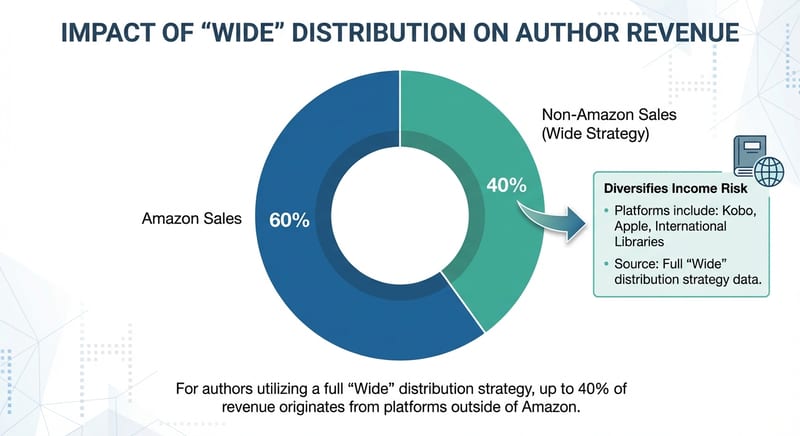
While Amazon is the giant, it is not the entire world. PublishDrive’s global strategy emphasizes the 'Wide' approach—distributing to Kobo, Apple Books, Google Play, and library aggregators. In many international markets, Amazon’s market share is significantly lower.
The 'Wide' strategy allows for tactics impossible on Amazon KDP Select, such as 'Price Pulsing.' This involves temporarily dropping a book’s price to Free or $0.99 on specific retailers to court their internal merchandising teams. Getting featured on Apple Books’ 'Best of the Month' requires direct retailer relationships that exclusivity clauses prevent.
Nuance: The Metadata Localization Edge
Going wide isn't just about ticking boxes on a dashboard; it requires metadata localization. A thriller described as a 'summer beach read' in the US needs different positioning when marketed to a winter audience in Australia. Adjusting keywords and descriptions for regional dialects and seasonality is a high-level lever for global sales.
Furthermore, library distribution via OverDrive or Hoopla can generate significant backend royalties that many authors ignore. Librarians curate based on professional reviews and metadata, not just sales velocity.
The Long Tail: The Asset-Based Mindset
Ultimately, the difference between a hobbyist and a professional is the timeline. Hobbyists obsess over launch week; professionals obsess over the backlist. A book is an asset that should yield dividends for decades. Marketing strategies must therefore pivot from 'launch intensity' to 'evergreen consistency.'
This involves setting up automated email sequences (autoresponders) that nurture new readers who discover your first book, guiding them systematically through your entire backlist. It means updating back matter in older books to point to new releases. It creates a flywheel effect where every new release revitalizes sales of previous titles.
"The best marketing for your old book is writing a new book. - Industry Adage"