BookSirens Alternatives: 7 ARC Platforms Compared (2026)

A grounded comparison of 7 BookSirens alternatives for 2026: Read & Rate, StoryOrigin, BookSprout, Hidden Gems, NetGalley, Voracious Readers Only, and LibraryTh
Why look beyond BookSirens?
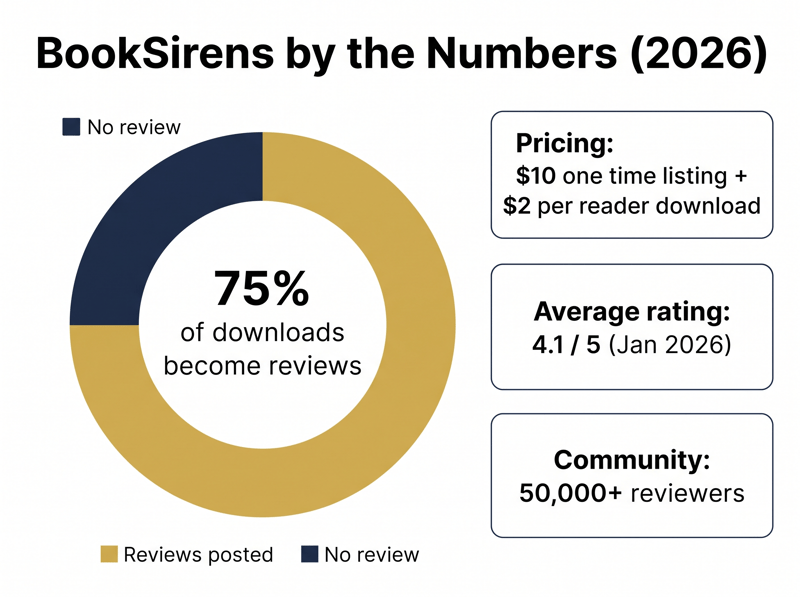
Credit where it is due: BookSirens earns its reputation. According to its official pricing page, you pay a one time $10 listing fee per book, then $2 for every reader the platform finds who downloads your ARC. The site reports that about 75 percent of downloads result in a review, the average rating across all books sat at 4.1 out of 5 as of January 2026, and the reviewer community numbers over 50,000 readers. For a straightforward launch, that math works: 20 readers cost you $50, and history says roughly 15 of them will post a review. If you want the full playbook on advance copies first, start with our complete guide to ARC book reviews.
So why shop around? Three reasons come up again and again. First, per reader billing scales against you: a 100 reader push costs $210, and prolific authors either eat that on every release or move to the $100 per year unlimited plan. Second, the audience skews heavily American; the UK publishing services firm publishing.co.uk estimates only 10 to 15 percent of BookSirens reviewers are UK based, which matters if amazon.co.uk visibility is part of your plan. Third, reviews concentrate on Amazon and Goodreads, while some authors need traction on other storefronts too. We covered the same trade-offs from the opposite angle in our NetGalley alternatives and BookSprout alternatives breakdowns.
What should you compare in an ARC platform?
- Cost model: flat fee, per reader billing, subscription, or free swap. A cheap platform that delivers no reviews is the most expensive option of all||Review completion rate: what share of downloads actually turn into posted reviews||Where reviews land: Amazon only, Amazon plus Goodreads, or additional platforms and regional stores||File security: watermarked or tracked ARC files reduce the piracy risk that comes with mass distribution||Reader base fit: genre match and geography matter more than raw subscriber counts
Weight these by your actual goal. A debut author chasing 25 launch week Amazon reviews has different needs from a series author building a 200 person ARC team, or a nonfiction author who wants library visibility. Keep that goal in mind as you read the seven profiles below; each one ends with the author type it fits best.
1. Read & Rate: community reviews that land on multiple platforms
Read & Rate is a community based review platform built specifically for self published authors, and it fixes the two problems paid distribution services leave open. First, security: every review copy is delivered as an automatically watermarked PDF, so each file is traceable to the reviewer who downloaded it. That is a meaningful deterrent given how often ARC files leak onto piracy sites. Second, placement: when a reviewer picks up your book, they choose which platform their review lands on, and you can add multiple targets beyond Amazon. If you need traction on Goodreads or other storefronts as well as Amazon, you set that up once instead of begging readers to cross post.
Two features stand out for authors who care about craft as much as visibility. Each reviewer leaves a private comment only you can see, so you get candid feedback alongside the public review. And the platform includes a community hub where authors exchange launch tactics and lessons, which functions like a built in mastermind. There is a free trial, so you can test the exchange before spending anything. Best for: authors who want reviews on more than one platform, plus honest private feedback, without per reader billing.
2. StoryOrigin: free review swaps for genre fiction
StoryOrigin runs on a swap model: you list your book for ARC readers, and in exchange you read and review other authors' books. The free tier covers the basics, with paid plans for advanced features. According to publishing.co.uk's 2026 comparison, a realistic campaign distributes 20 to 50 copies and produces 5 to 20 posted reviews, with roughly 20 percent of reviewers UK based. The trade-off is time: swaps mean you are reading other people's books, and fellow authors tend to be supportive but slow. Best for: genre fiction authors with more time than budget, and series authors building an ARC team for book two and beyond.
3. BookSprout: subscription ARC distribution for prolific authors
BookSprout flips the cost model to a tiered monthly subscription with built in review tracking, which changes the economics entirely if you publish often. Instead of paying per reader on every release, you pay a flat monthly fee and reuse the same reviewer base across your catalog. The platform claims a reader community of 40,000 plus, though completion depends heavily on genre fit since readers can claim ARCs without a strong obligation to review. We ranked its strengths and weaknesses in detail in our BookSprout alternatives guide. Best for: authors releasing several books per year who want predictable costs and one persistent ARC team.
4. Hidden Gems: curated, genre matched reviewers
Hidden Gems is the premium pick: a curated service that matches your book to vetted, genre appropriate reviewers and manages delivery for you. publishing.co.uk puts 2026 campaign costs at roughly £50 to £200 (about $65 to $255) scaling with reviewer count, with a realistic outcome of 20 to 50 reviews at higher average quality than cheaper services. The reader base is heavily American, around 85 percent US. You pay for curation, and for popular genres like romance there can be a waitlist, so book your slot early. Best for: authors with budget who want dependable, higher quality reviews across a series.
5. NetGalley: trade and library reach at a trade price
NetGalley is the only platform on this list where librarians, booksellers, and journalists browse for titles, with a professional reader base publishing.co.uk estimates at 400,000 plus. That reach costs real money: 2026 pricing guides put a direct six month listing at $450 to $575, with co-op listings through aggregators from around $200 per title. A realistic campaign yields 20 to 80 reviews and occasionally a media mention, but completion rates run lower than vetted indie platforms; roughly a third of downloaders post reviews. Best for: authors targeting bookstores and libraries, or literary fiction with media ambitions. For everyone else, see our NetGalley alternatives first.
6. Voracious Readers Only: free and reader only
Voracious Readers Only is free, and unlike swap platforms its list is made of readers, not other authors. You list your book, readers request it, and matching happens manually. The list is smaller than the big platforms, and publishing.co.uk pegs a realistic campaign at 10 to 25 reviews, but it stands out on one axis: it is one of the few ARC platforms with a strong UK reviewer concentration. Best for: UK authors, and budget conscious indies who want to add a free reader only channel on top of a swap or paid platform.
7. LibraryThing Early Reviewers: free listings for visibility
LibraryThing's Early Reviewers program lets authors and publishers list giveaway copies for the site's long standing community of heavy readers, and it costs nothing to participate. It appears consistently in roundups of the best ARC sites, with one honest caveat: reviews land on LibraryThing itself, and cross posting to Amazon is never guaranteed. Treat it as a visibility and social proof channel rather than an Amazon review engine. Best for: authors who want zero cost exposure to committed readers and are patient about where reviews appear.
How do the costs actually compare?
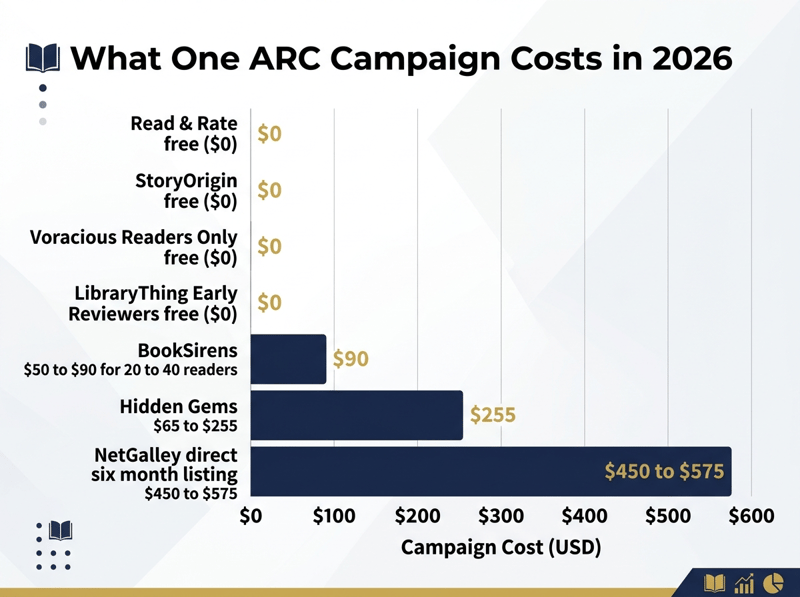
Here is the honest per campaign math for 2026. Read & Rate, StoryOrigin, Voracious Readers Only, and LibraryThing Early Reviewers cost nothing to start; you pay in reciprocity or time instead. BookSirens lands at $50 to $90 for a typical 20 to 40 reader campaign under its $10 plus $2 per reader model. Hidden Gems runs roughly £50 to £200 depending on reviewer count. NetGalley sits at the top: $450 to $575 for a direct six month listing, or from around $200 through a co-op. The right question is not which is cheapest but which cost model matches your release schedule: per campaign pricing suits occasional publishers, subscriptions and communities reward frequent ones.
Which platform fits your author profile?
- Debut author, no budget: Read & Rate plus StoryOrigin plus Voracious Readers Only. Free stack, realistic path to 20 or more launch reviews||Debut author, $100 to $200 budget: add a BookSirens campaign on top of the free stack for another 10 to 30 reviews||Series author, several releases per year: Read & Rate community plus a BookSprout subscription, so the same ARC team follows every release||Author with budget who values quality over volume: Hidden Gems, booked well before launch||Bookstore, library, or media ambitions: NetGalley, stacked with at least one indie platform for Amazon review volume||UK focused author: Voracious Readers Only plus Read & Rate with amazon.co.uk added as a review target
Stacking is normal, not cheating. The same book listed on two or three platforms simply reaches more of the readers who opt into advance copies. If Pubby is also on your shortlist, read our Pubby alternatives comparison before you commit; its credit swap mechanics create incentives that sit uncomfortably close to Amazon's review policy lines.
How many ARCs do you need to hit your review target?
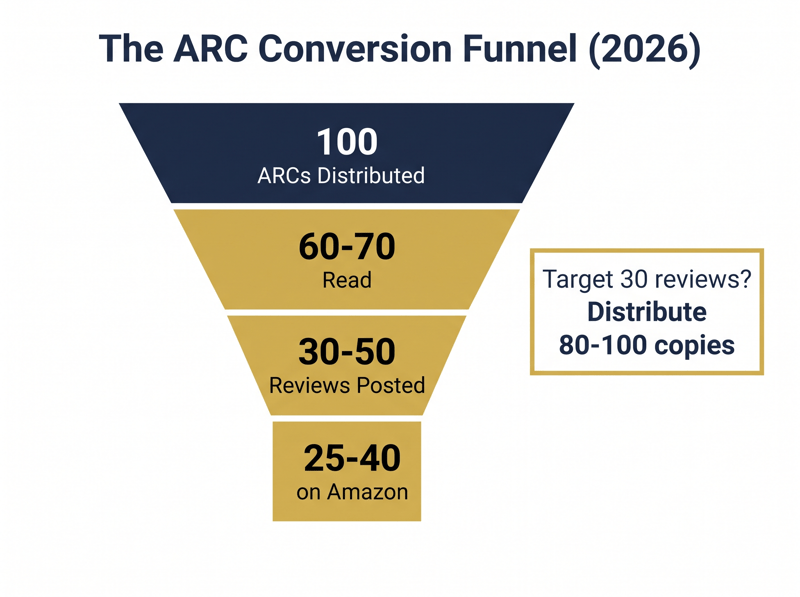
Plan backwards from your launch goal using publishing.co.uk's 2026 rule of thumb: for every 100 ARCs distributed, expect 60 to 70 to be read, 30 to 50 reviews posted, and 25 to 40 of those appearing on Amazon. The numbers are genre dependent estimates, not guarantees, but the ratio holds up: distribution roughly triples your review target. Want 30 launch reviews? Plan for 80 to 100 distributed copies. Vetted platforms beat the average (BookSirens reports 75 percent of downloads converting), open claim platforms fall below it, which is why your platform mix matters as much as your total count.
Frequently asked questions
Is BookSirens still worth using? Yes, for many authors. A reported 75 percent review completion rate and transparent per reader pricing make it a reliable paid channel. The point of this guide is not that BookSirens is bad; it is that stacking it with free community platforms, or replacing it when your profile fits another tool better, usually produces more reviews per dollar.
Can I use several ARC platforms for the same book? Yes, and most experienced indie authors do. Listing the same title on two or three platforms is standard practice and simply widens the pool of willing reviewers. Just track who received copies where, so your launch reminders go to everyone.
Do ARC reviews violate Amazon's terms of service? No. Offering a free advance copy in exchange for an honest review is accepted practice, provided reviewers disclose it and nobody promises a positive rating. What breaks the rules is compensation for reviews, coordinated ratings, and undisclosed incentives. Our guide to Amazon's review rules covers the 2026 policy in detail.
How early should I send ARCs? Four to six weeks before launch. Reviewers need time to read, and last minute distribution is the most common reason campaigns underdeliver. Send two polite reminders at most: one two weeks out, one on launch day.
Reviews are the multiplier
Whichever platform you pick, the strategy underneath is the same: reviews are the multiplier on everything else you do, from ads to pricing. A stacked ARC campaign that produces 30 to 50 honest reviews turns every future marketing dollar into a better bet. Read & Rate gives you the community, the watermarked delivery, and the multi platform review placement to run that campaign without per reader fees. Start your free trial and see how many reviewers pick up your book this week.