Is Pubby Legit in 2026? What Authors Are Really Saying

A factual review of Pubby's book review platform in 2026, covering real author complaints, disappearing Amazon reviews, queue stagnation, pricing, and the best
What Is Pubby and How Does It Work?
Pubby operates on a karma-exchange model. Authors earn "snaps" (Pubby's internal currency) by reading and reviewing other authors' books on Amazon. Those snaps are then redeemed to get their own books reviewed. The platform runs as a subscription at $29.99 per month, or $20 per month billed annually, with a 10-day free trial. On paper, it is an elegant solution to the classic problem of getting your first reviews on a new title without paying per review.
When it launched, Pubby attracted a loyal base of KDP authors who appreciated the community feel and low relative cost. The model depends on supply-demand balance: enough authors reading and reviewing to keep the queue moving for everyone. That balance has become increasingly difficult to maintain as the platform has grown and reviewer engagement has declined.
Is Pubby Legit? The Honest Answer
Pubby is a real company with a functional platform, not an outright scam. It processed thousands of reviews for KDP authors from 2019 through roughly 2023. But "legitimate" is not the same as "effective," and in 2026, the gap between the two has grown significantly. Authors are paying real money for a service that, for many, has stopped delivering results. That distinction matters when you are building your book's review foundation.
What Authors Are Actually Experiencing in 2025-2026
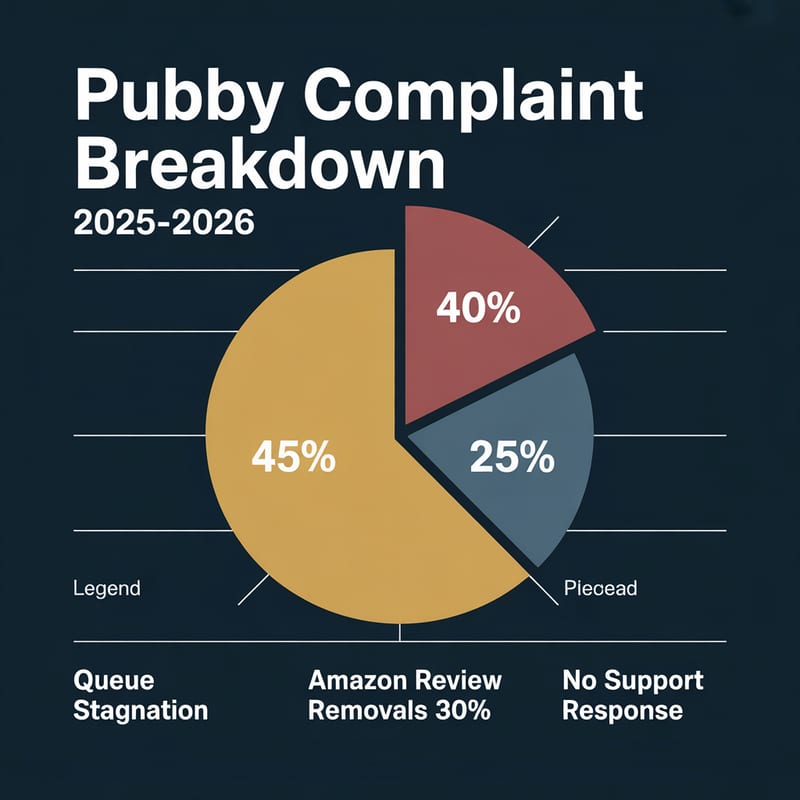
The most consistent complaint in author reviews on SmartCustomer and on writer forums is queue stagnation. One author reported reposting a book that had previously been reviewed many times and waiting more than three weeks without a single reviewer picking it up, while charges continued. Another described going weeks waiting for a single review with more than 10 requested. Support rarely resolves it: one author reported sending six emails and receiving exactly one response.
A second category of complaints involves reviews disappearing from Amazon. One detailed author account reports that a full 25 percent of reviews earned through the platform were later pulled by Amazon, usually with no warning. Another author lost every earned review, along with their Amazon account, after Amazon flagged the exchange activity as a guidelines violation. In the reported cases, no refunds or account credits were offered.
A third consistent pattern: authors who have left 20 or more reviews for other authors and received nothing in return. Pubby does allow refund requests (returning snaps), but caps these at 10 per year. Authors who give far more than they receive have very limited recourse. This asymmetry breaks the core promise of the exchange model that Pubby was built on.
How Much Does Pubby Cost vs. What You Actually Get?
Pubby's pricing is $29.99 per month, or $20 per month billed annually, after a 10-day free trial, with no per-review fees. A Pubby Pro tier for authors who do not want to review other books costs $250 per month. The subscription theoretically covers unlimited reviews for all your books. In practice, the value you receive depends entirely on the health of the platform's active reviewer pool. Authors reporting weeks or months without reviews are spending $90 or more before cancelling, with minimal chance of a refund.
The larger cost is strategic: time. Authors who wait months on Pubby while their book launch window closes are losing far more than the monthly fee. A book's review velocity in the first 30-60 days after publication significantly affects its algorithmic visibility on Amazon. A stalled review queue during that window can have lasting consequences on discoverability.
Pubby Alternatives That Actually Work in 2026
For authors who need reliable review coverage, several platforms offer better transparency and more consistent results in 2026. The key differentiators to look for: multi-platform support (not just Amazon), reviewer accountability and genuine reading commitment, clear queue visibility, and pricing that matches what you actually receive.
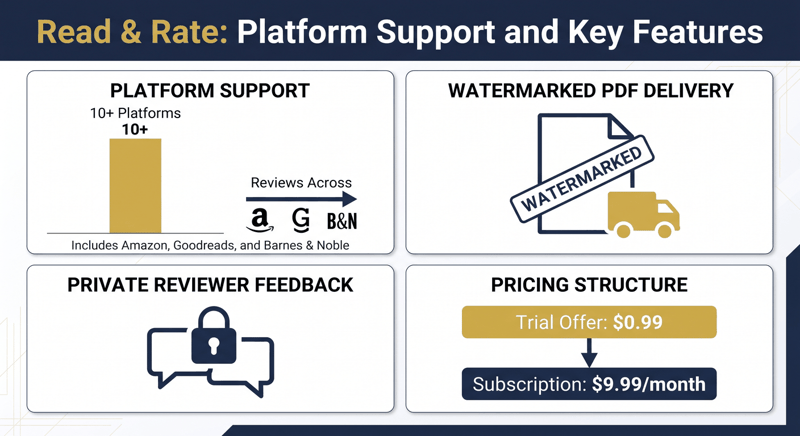
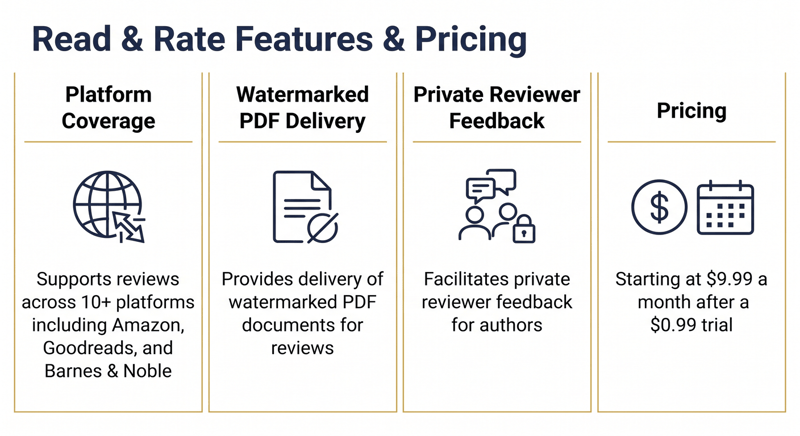
Read & Rate (readnrate.com) is built specifically around the problems Pubby now struggles with. Rather than a karma exchange, it uses a structured community model where reviewers commit to reading the book, not just skimming it. Authors can direct reviews to multiple platforms simultaneously: Amazon, Goodreads, Barnes & Noble, and others. The platform also provides private reviewer comments visible only to the author, giving actionable feedback without the risk of a public note that might do more harm than good. Watermarked PDF delivery means reviewers cannot redistribute files without accountability. Plans start at $0.99 for a 14-day trial, then $9.99 to $19.99 per month.
Other platforms worth considering: BookSirens offers free ARC distribution with optional paid features and is well-suited for digital galleys. NetGalley is the premium option for authors with distribution budgets. It works best for books with broader retail reach. Reedsy Discovery is designed specifically for self-published authors, with a reader community rather than an author exchange model. Each has trade-offs in cost, reach, and control.
It is worth noting that Pubby's decline is not unique to it. Review exchange platforms across the board have faced increasing pressure from Amazon's review removal policies, making the karma-swap model harder to sustain. The platforms that are working in 2026 are generally those that have moved away from peer exchanges and toward curated reader communities with genuine engagement accountability.
What to Look For in a Book Review Platform
Before committing to any book review platform in 2026, run through these questions. First: does it require reviewers to actually read the book, or just skim and generate a generic response? Generic reviews are not just useless; they can flag your title to Amazon's algorithms. Second: does the platform support more than Amazon? Diversifying your review presence across Goodreads and other retailers reduces your risk exposure. Third: is there real queue visibility? You should know where your book stands, not receive silence and auto-replies. Fourth: what is the refund or dispute policy if the service fails to deliver? A platform with no recourse is not a platform. It is a subscription to hope.
The Bottom Line: Should You Use Pubby in 2026?
Pubby worked for a lot of authors between 2019 and 2023. In 2025-2026, the evidence points clearly in one direction: the platform is struggling to deliver on its core promise. Queue stagnation, disappearing Amazon reviews, and minimal support responsiveness have turned what was a legitimate tool into an unreliable one. That does not mean it will never improve, but you should not bet your book launch on it right now.
If you are looking for a platform that combines multi-platform review distribution, genuine reader accountability, private author feedback, and transparent pricing, Read & Rate was built for exactly this. The 14-day trial costs $0.99, less than five minutes of Pubby's monthly fee, and gives you a real picture of whether the community fits your book before you commit.