Author Street Team: How to Build One That Shows Up (2026)

Build an author street team that shows up at launch: where to recruit, how big to go, what to give members, and how to stay inside FTC and Amazon review rules.
What is an author street team?
A street team is a group of readers who volunteer to help an author spread the word. The term comes from the music industry, where fans once handed out flyers before concerts. For authors, the flyers are now social posts, newsletter shares, library requests, bookstore suggestions and conversations in reading groups.
A street team is not the same thing as an ARC team or a beta reader group, even though the same people often belong to all three. Mixing up the roles is the most common reason street teams fizzle, because members never know what you actually need from them.
- Beta readers read an unfinished draft and tell you what works before you publish. See our guide to beta readers for self-published authors||ARC readers get an advance copy shortly before launch and may choose to leave an honest review. Our ARC book reviews guide covers that process in depth||Street team members promote. They share posts, talk about the book, request it at libraries and keep the buzz going after launch day, whether or not they review
Kindlepreneur's Dave Chesson draws the same line in his guide to building an ARC launch team, which separates ARC, beta and street teams before it covers anything else. Once you define the street team as a promotion group, everything else gets easier: who to recruit, what to ask for and how to thank people.
Why does a street team matter for indie authors?
Readers still find books through people. The Written Word Media 2026 Reader Survey asked 3,589 readers where they discover new books. Amazon led at 68%, followed by email newsletters at 64%, Goodreads at 46%, friends and family at 45% and social media at 42%. Author websites came in at 30%.
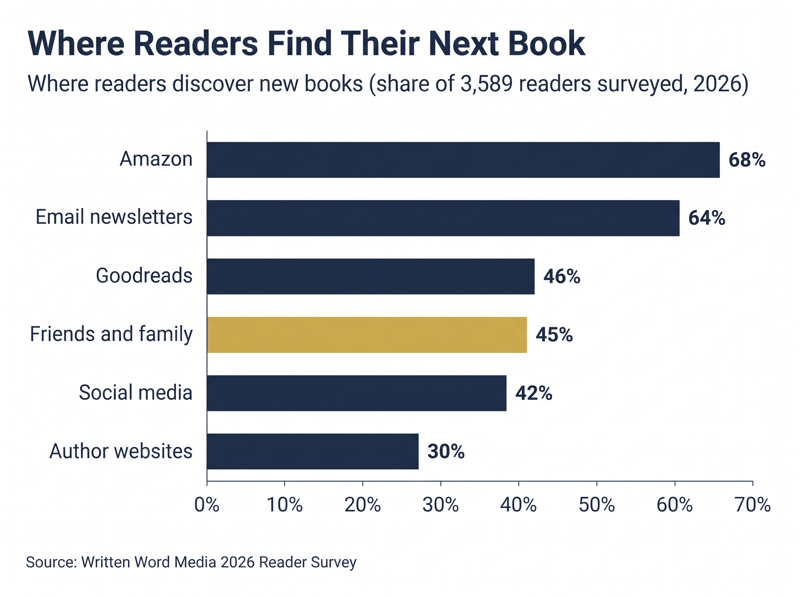
A street team touches almost every channel on that list at once. Members talk to friends and family, post in social feeds, add your book to Goodreads shelves and forward your newsletter. One caveat matters: the survey respondents already subscribe to Written Word Media's newsletters and skew toward active digital readers, so treat the numbers as a strong signal for heavy readers rather than a picture of every book buyer.
The other reason is cost. A street team runs on goodwill, early access and recognition, not ad spend. For an indie author with a modest budget, a few dozen engaged readers can create the launch week activity that the Amazon algorithm and other readers notice.
How big should your street team be?
Smaller than you think, at least at the start. Author Melissa Dymond, writing on the BookBub Partners blog in August 2026, says her street team now has more than 600 readers alongside a newsletter of more than 25,000 subscribers. Her advice for beginners is the opposite of that scale: even a group of 5 to 10 readers can make a difference.
Other guides land in a similar place. The publishing.co.uk launch team guide argues that "20-50 committed readers beats 500 passive ones." Expect drop off too. Chesson writes that you will see less than 25% of a typical ARC team actually leave a review or help with promotions, which is why he recommends recruiting 25 or more members.
A practical rule: invite three to four times as many people as the number of active helpers you need. If you want 10 people sharing on launch day, start with 30 to 40 invitations, then keep the ones who show up.
Where do you recruit street team members?
Recruit readers who already like your work and already talk about books. Dymond's first rule is to find people who love sharing recommendations, not people who want free stuff. Writer's Digest contributor Jennifer Probst, who grew her group from twenty members to more than one thousand, gives the same warning: do not persuade readers to join for the giveaways.
- Your newsletter: add a sign-up link to every email and to your automated welcome sequence. Our guide to email list building for authors shows how to set that sequence up||Back matter: add a short invitation page after "The End," when readers feel most connected to the story||Readers who reply: anyone who emails you, tags you or leaves thoughtful comments is a warm candidate||Past ARC and beta readers: the people who already delivered feedback on time are your most reliable members||Genre communities: reader groups, Discord servers and author communities where you already participate as a member, not as an advertiser||Your social channels: one pinned post explaining what the team does and how to apply
Use a simple application form. Ask for a name, email, favorite books in your genre, the platforms where they are active and one sentence on why they want to join. The last question filters out freebie hunters quickly. Then state the expectations upfront, such as "share one post during launch week," so nobody is surprised later.
What should you ask street team members to do?
Give each member one easy job per launch, then let enthusiasts do more. A menu of small, specific actions works better than a vague request to "help spread the word."
- Share your cover reveal or launch post on their own social account||Forward your launch newsletter to one friend who reads the genre||Add the book to their Goodreads "Want to Read" shelf||Request the book at their local library or ask a bookstore to stock it||Post a photo of the book in their reading spot during launch week||Comment on or share your ad and social posts so they reach more people||Mention the book in reader groups where recommendations are welcome
Notice what is missing from that list: "leave a five-star review." Members who read the book may choose to review it, and you can tell them where reviews help. But the review must stay optional and honest. The moment reviews become the price of membership, your street team turns into a compliance problem.
How do you reward a street team without breaking review rules?
On August 14, 2024, the US Federal Trade Commission voted 5 to 0 to finalize its rule banning fake reviews and testimonials. Among other things, it prohibits "compensation or other incentives conditioned on the writing of consumer reviews expressing a particular sentiment," and it lets the agency seek civil penalties against knowing violators. It also targets undisclosed reviews from company insiders and reviews solicited from immediate relatives without disclosure.
The FTC's Endorsement Guides FAQ goes further on perks: "Even an incentive with no financial value might affect the weight or credibility of an endorsement." In plain terms, a free ebook or a signed bookmark is a material connection, and anyone who reviews or promotes your book after receiving one should say so.
Amazon is stricter still. As Reedsy puts it, "publicly asking for reviews and incentivizing readers to post one for you is against Amazon's terms of service." We break down the details in Amazon review rules for authors.
Safe rewards are about access and recognition: early cover reveals, sneak peek chapters, a private Q and A, a thank you in the acknowledgments, naming a minor character after a member, or a members-only bonus scene. These cost little, build loyalty and have nothing to do with what anyone writes in a review.
Where should your street team live?
Pick one home base and one backup. A private Facebook group is still the most common choice, and the reader data supports it: in the same Written Word Media survey, 38% of readers said they follow authors on Facebook. Email is even stronger, with 49% saying they subscribe to author newsletters. TikTok, despite the hype, was where only 2% of these readers follow authors.
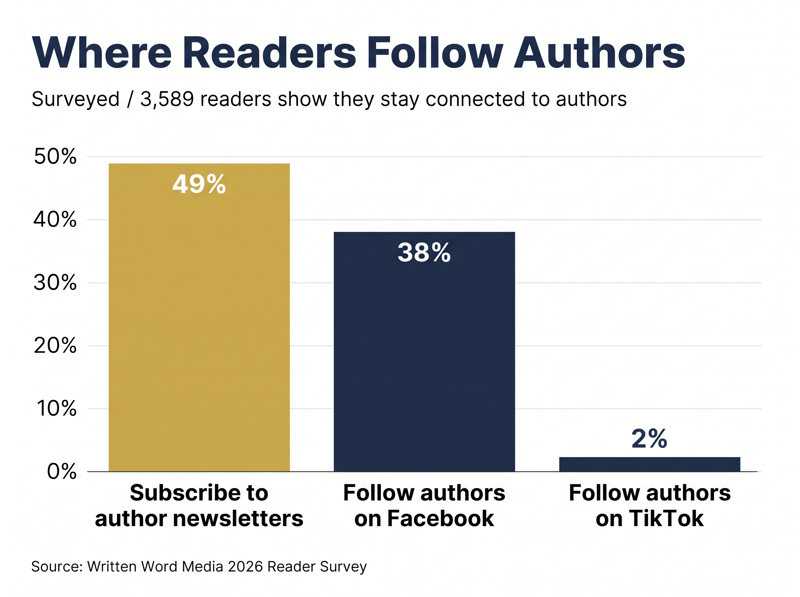
That does not mean TikTok is useless. Our BookTok guide for indie authors shows where it works. It means your street team's home should be a place your readers already check, with a direct line to you. A practical setup looks like this:
- Email segment: tag team members in your newsletter tool so you can send them launch kits and reminders directly. Email does not depend on an algorithm||Private group: a Facebook group, Discord server or community space for conversation, polls and sneak peeks||Shared folder: one link with graphics, blurbs, buy links and a posting calendar, updated for each launch
Keep the group private and give it a name that fits your books. Probst warns against treating the group like a personal page or filling it with other authors' promotions. The space should feel like a club for your readers, run by you, not by an assistant posting on your behalf.
How do you run a launch with your street team?
Four to six weeks before launch
Tell the team the launch date and share the cover first, before the public sees it. Ask one question, such as which tagline they prefer, so members feel invested. If your ARC copies are ready, offer them to members who want to read early, with a clear note that a review is welcome but never required. Distribute files securely; our article on protecting your book from piracy explains why watermarked files matter for early copies.
Launch week
Send the launch kit three to five days ahead: two or three square and vertical graphics, a short and a long blurb, the buy links for every store you sell on, suggested hashtags and a simple "pick one action" checklist. Dymond calls this a ready-to-use launch kit, and it removes the biggest barrier to sharing, which is not knowing what to post. On launch day, post in the group, thank the first people who share and highlight what members are doing so others follow.
The two weeks after launch
Most launches lose momentum in week two. Plan a second wave: a quote graphic, a behind-the-scenes post or a live chat with the team. Remind ARC readers once, politely, that an honest review on any platform is appreciated if they finished the book. Then stop asking. Repeated nagging is the fastest way to lose good members.
How do you keep a street team active between books?
A street team that only hears from you at launch time feels used. Dymond says she interacts with her members three to five times a week, mostly through conversation rather than promotion. You do not need that pace, but you do need a rhythm. A weekly prompt in the group and a monthly members-only email are enough for most authors.
Be realistic about email engagement, too. Mailchimp's email marketing benchmarks, last updated in December 2023, put the average unique open rate across all users at 35.63%, the average click rate at 2.62% and the unsubscribe rate at 0.22%. Apple's Mail Privacy Protection inflates open rates, so clicks are the number to watch.
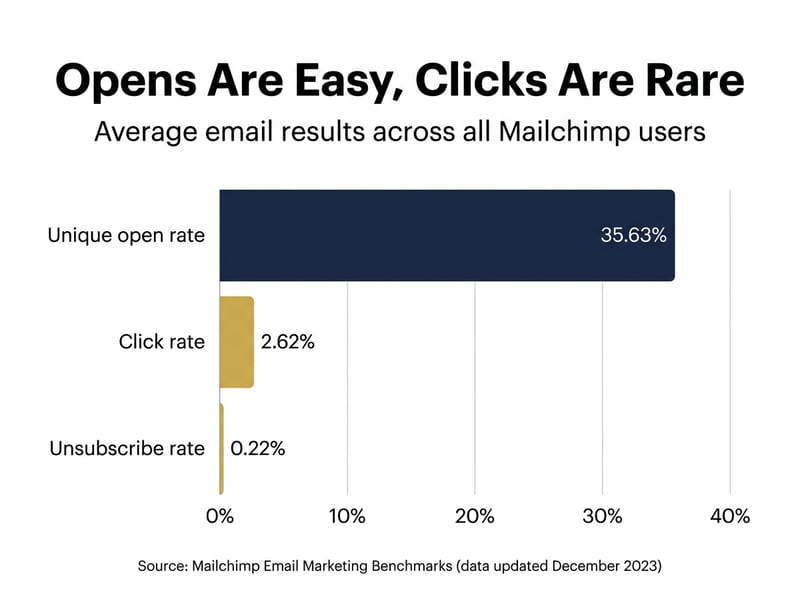
That gap is the strongest argument for a street team. A general newsletter gets opened, but few readers act. A small group of people who opted in to help will act at a far higher rate, because they asked for the job. Treat your street team emails as conversations: short, personal and focused on one action.
Between launches, give members reasons to stay: polls on character names or cover options, early looks at chapters, birthday notes and public shout-outs. Dymond adds that her team helps her find alpha and beta readers and forms the heart of her ARC team, so the community pays off at every stage of a book, not just on release day.
How do you measure whether your street team works?
None of the top guides on this topic gives authors a way to measure a street team, yet measurement is what separates a growing team from a dead group. Keep a simple spreadsheet scorecard with one row per member and one column per launch.
- Participation rate: members who completed at least one action, divided by total members. If it falls under one in four, your team is too big or your asks are unclear||Actions per launch: shares, library requests and newsletter forwards that members report in the group||Click-through on team emails: compare it with your main newsletter to see whether the team is truly more engaged||Tracked link sales: give the team its own tracked link and compare launch week clicks and sales with previous books||Retention: how many members from the last launch are still active for this one
After each launch, thank everyone, then quietly refresh the roster. Invite new readers in, and move members who have not engaged in two launches to your regular newsletter. Dymond notes that street teams change over time, and that is healthy. Pair the scorecard with listing metrics such as your cover, description and reviews; our Book Biometrics guide covers the numbers that tell you whether launch traffic is converting.
How does Read & Rate fit next to your street team?
Your street team should do what it does best: promote. Collecting honest reviews from readers who do not already know you is a separate job, and it is where many authors overload their teams. Read & Rate handles that side. Authors list a book, readers download a watermarked file, and reviewers can post on Amazon and the other platforms the author selects, such as Goodreads, Barnes & Noble, Apple Books or Google Books. Every reviewer also leaves a private comment that only the author sees, which gives you candid feedback alongside the public review.
Read & Rate also includes a community hub where authors swap tips and help one another, which makes it a good place to compare notes on street team ideas. For more ways to connect with other writers, see our guide to self-published author communities.
Frequently asked questions
A street team is not built in one launch. Start with the five readers who already love your books, give them a real role and a reason to stay, and measure who shows up. By your third release, you will have a group of people who are as excited about launch day as you are.